Daphne
Daphne è un’opera in german di Richard Strauss, rappresentata per la prima volta nel 1937.
Daphne, Op. 82, is an opera in one act by Richard Strauss, subtitled "Bucolic Tragedy in One Act". The German libretto was by Joseph Gregor. The opera is based loosely on the mythological figure Daphne from Ovid's Metamorphoses and includes elements taken from The Bacchae by Euripides.
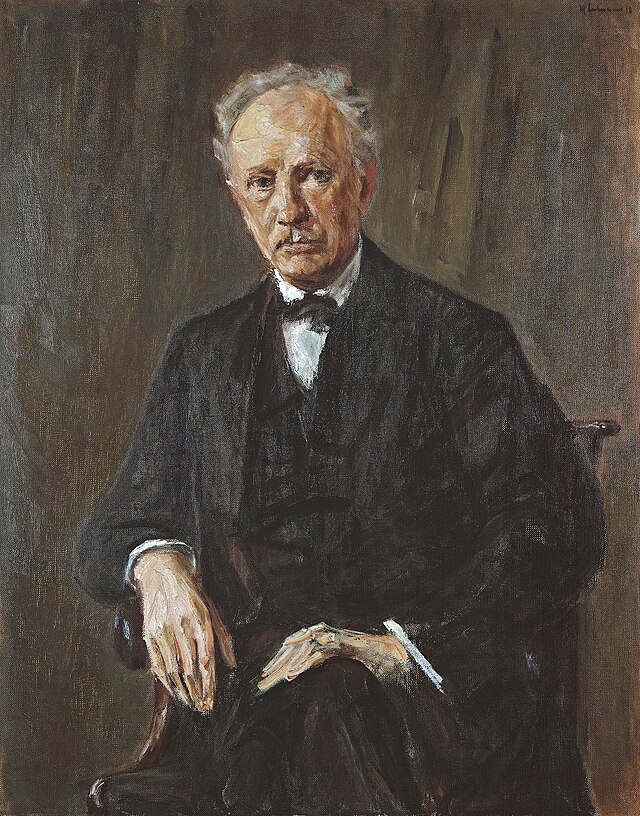
Richard Strauss (1864–1949) — compositore german, periodo Verismo. Prima rappresentazione di Daphne nel 1937.
Trama di Daphne
The chaste girl Daphne sings a hymn of praise to nature. She loves the sunlight as trees and flowers do, but she has no interest in human romance. She cannot return the love of her childhood friend Leukippos, and she refuses to put on the ceremonial clothes for the coming festival of Dionysos, leaving Leukippos with the dress she has rejected. Daphne's father Peneios tells his friends he is certain that the gods will soon return among men. He advises preparing a feast to welcome Apollo. Just then a mysterious herdsman appears. Peneios sends for Daphne to care for the visitor. The strange herdsman tells Daphne that he has watched her from his chariot, and repeats to her phrases from the hymn to nature she sang earlier. He promises her that she need never be parted from the sun, and she accepts his embrace. But when he begins to speak of love she becomes fearful and runs out. At the festival of Dionysos, Leukippos is among the women wearing Daphne's dress, and he invites her to dance. Believing him to be a woman she agrees, but the strange herdsman stops the dance with a thunderclap and says she has been deceived. Daphne answers that both Leukippos and the stranger are in disguise, and the stranger reveals himself as the sun-god Apollo. Daphne refuses both her suitors, and Apollo pierces Leukippos with an arrow. Daphne mourns with the dying Leukippos. Apollo is filled with regret. He asks Zeus to give Daphne new life in the form of one of the trees she loves. Daphne is transfor…
Estratto dalla sezione Synopsis dell’articolo Wikipedia — testo rilasciato con licenza CC BY-SA 4.0. Leggi la trama completa →
Cast e personaggi di Daphne
11 personaggi documentati da Wikidata con indicazione del registro vocale:
- personshepherd 3 (bass)
- personshepherd 4 (bass)
- personPeneios (bass)
- personLeukippos (tenor)
- personApollo (tenor)
- personDaphne (soprano)
- personFirst maids (soprano)
- personSecond maids (soprano)
- personGaea (contralto)
- personshepherd 2 (tenor)
- personshepherd 1 (baritone)
Libretto di Daphne
Il libretto è scritto da Joseph Gregor.
Da Metamorphoses all’opera
Daphne è un adattamento di Metamorphoses — soggetto letterario di partenza per il libretto.
L’archivio documenta 5 altre opere derivate dallo stesso soggetto:
- Il Pigmalione — Gaetano Donizetti
- Aci, Galatea e Polifemo — George Frideric Handel
- Apollo et Hyacinthus — Wolfgang Amadeus Mozart
- Acis and Galatea — George Frideric Handel (1718)
- Così fan tutte — Wolfgang Amadeus Mozart (1790)
Opere contemporanee
Rappresentate nel decennio a cavallo del 1937, altre 3 opere del repertorio archiviato di compositori diversi:
Altre opere di Richard Strauss
- Ariadne auf Naxos
- Capriccio
- Des Esels Schatten
- Die ägyptische Helena
- Die Frau ohne Schatten
- Die Liebe der Danae
- Die schweigsame Frau
- Elektra
- Feuersnot
- Friedenstag
Dati sull’opera provenienti da Wikidata (CC0, pubblico dominio).