Friedenstag
Friedenstag è un’opera in german di Richard Strauss.
Friedenstag is an opera in one act by Richard Strauss, his Opus 81 and TrV 271, to a German libretto by Joseph Gregor. The opera was premiered at the National Theatre Munich on 24 July 1938 and dedicated to the leading singer Viorica Ursuleac and her husband, conductor Clemens Krauss. Strauss had intended Friedenstag as part of a double-bill, to be conducted by Karl Böhm in Dresden, that would include as the second part his next collaboration with Gregor, Daphne. The opera thematically expresses anti-war sentiments, which William Mann has described as "a determined counter to the militaristic policies of Nazi Germany". These caused the work to be shelved after the outbreak of World War II.
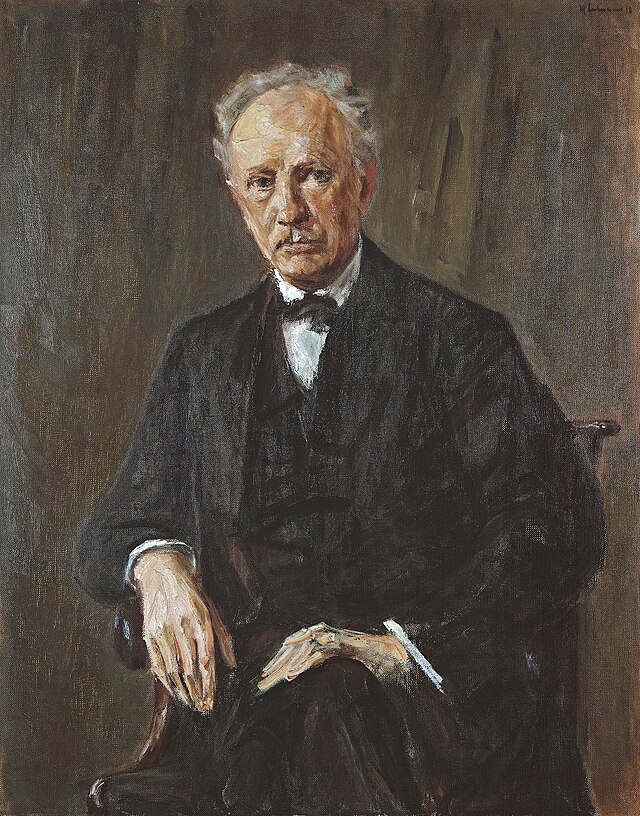
Richard Strauss (1864–1949) — compositore german, periodo Verismo.
Trama di Friedenstag
The Sergeant of the Guard receives a report from a private that the enemy has just set fire to a farm. A young Italian messenger from Piedmont arrives with a letter from the Emperor to the town Commandant, and then sings of his homeland. The munitions officer, a musketeer and other soldiers mockingly comment on the youth as one who has never known war, just as they have never known peace. The soldiers then hear distant noises, thinking at first that these are the enemy, but then realizing it is the townspeople approaching the fortress, the Commandant appears to address the townspeople. The Mayor and a prelate appeal to the Commandant to surrender the town, claiming that both their side and the enemy are suffering needlessly. The Commandant, however, wants only total victory and dismisses the sentiments. An officer from the front appears and informs the Commandant that the town will fall unless the ammunition under the fortress is used. The Commandant refuses to release the ammunition for combat. The Commandant reads the letter from the Emperor to the townsfolk. The Emperor has declared that the town must hold, with no surrender. The people protest strongly, at 30 years of continuous war. The Commandant is shaken by the reaction, and orders the crowd to disperse and wait a further signal from him. He then orders his soldiers to collect the gunpowder underneath the fortress and to give him the fuse. The Commandant recalls how the Sergeant saved his life at the battle of Magdebu…
Estratto dalla sezione Synopsis dell’articolo Wikipedia — testo rilasciato con licenza CC BY-SA 4.0. Leggi la trama completa →
Cast e personaggi di Friedenstag
14 personaggi documentati da Wikidata con indicazione del registro vocale:
- personA musketeer (bass)
- personA bugler (bass)
- personA sergeant (bass)
- personThe Holsteiner (bass)
- personCommandant of the beleaguered town (baritone)
- personA corporal (tenor)
- personA private soldier (tenor)
- personA Piedmontese (tenor)
- personThe burgomaster (tenor)
- personA woman of the people (soprano)
- personMaria (soprano)
- personAn officer (baritone)
- personA front-line officer (baritone)
- personThe bishop (baritone)
Libretto di Friedenstag
Il libretto è scritto da Joseph Gregor. L’opera è classificata nel genere melodrama.
Altre opere di Richard Strauss
- Ariadne auf Naxos
- Capriccio
- Des Esels Schatten
- Die ägyptische Helena
- Die Frau ohne Schatten
- Die Liebe der Danae
- Die schweigsame Frau
- Elektra
- Feuersnot
- Guntram
Dati sull’opera provenienti da Wikidata (CC0, pubblico dominio).