Elektra
Elektra è un’opera in german di Richard Strauss.
Elektra, Op. 58, is a one-act opera by Richard Strauss, to a German-language libretto by Hugo von Hofmannsthal, which he adapted from his 1903 drama Elektra. The opera was the first of many collaborations between Strauss and Hofmannsthal. It was first performed at the Königliches Opernhaus in Dresden on 25 January 1909. It was dedicated to his friends Natalie and Willy Levin.
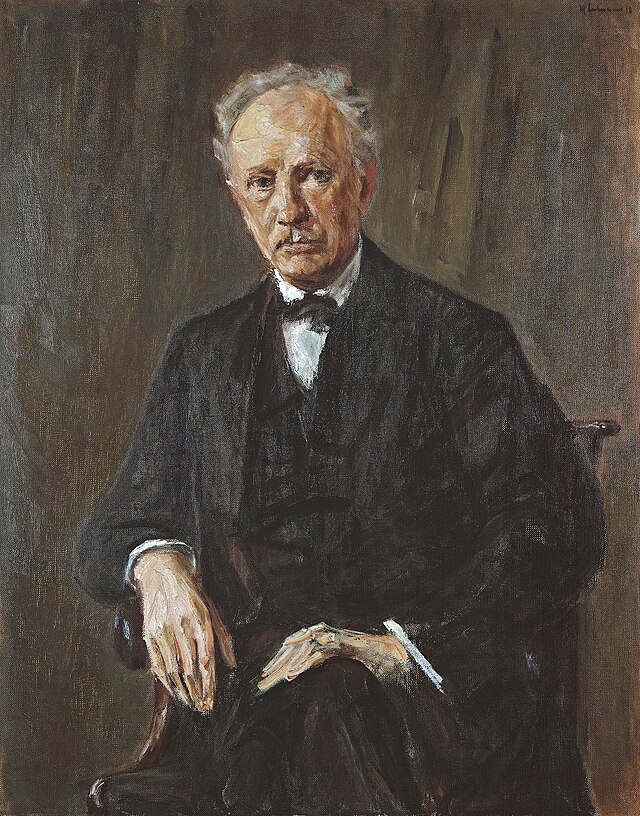
Richard Strauss (1864–1949) — compositore german, periodo Verismo.
Trama di Elektra
While based on ancient Greek mythology and Sophocles' tragedy Electra, the opera is highly modernist and expressionist in style. Hofmannsthal's and Strauss's adaptation of the story focuses tightly on Elektra, thoroughly developing her character by single-mindedly expressing her emotions and psychology as she meets with other characters, mostly one at a time. (The order of these conversations closely follows Sophocles' play.) The other characters are Klytaemnestra, her mother and one of the murderers of her father Agamemnon; her sister, Chrysothemis; her brother, Orestes; and Klytaemnestra's lover, Aegisthus. Various aspects from the myth are minimized as background to Elektra's character and her obsession. Other facets of the ancient story are completely excluded, in particular the earlier sacrifice by Agamemnon of his and Klytaemnestra's daughter Iphigenia, which was the motivation for Klytaemnestra's subsequent murder of Agamemnon. These changes tightened the focus on Elektra's furious lust for revenge. The result is a very modern, expressionistic retelling of the ancient Greek myth. Compared to Sophocles's Electra, the opera presents raw, brutal, violent, and bloodthirsty horror. Some scholars detect hints of incest in Elektra's dysfunctional family relationships. Norwegian musicologist Ståle Wikshåland has analysed the use of time and temporality in the dramaturgy of Elektra. Elektra is the second of Strauss's two highly modernist operas (the other being Salome), charact…
Estratto dalla sezione Synopsis dell’articolo Wikipedia — testo rilasciato con licenza CC BY-SA 4.0. Leggi la trama completa →
Cast e personaggi di Elektra
16 personaggi documentati da Wikidata con indicazione del registro vocale:
- personOrest's tutor (baritone)
- personAn old servant (bass)
- personA young servant (tenor)
- personOrest (Orestes) (baritone)
- personElektra (Electra) (soprano)
- personChrysothemis (soprano)
- personKlytaemnestra's confidante (soprano)
- personKlytaemnestra's trainbearer (soprano)
- personAn overseer (soprano)
- personSecond maid (mezzo-soprano)
- personAegisth (Aegisthus) (tenor)
- personFourth maid (soprano)
- personFifth maid (soprano)
- personKlytaemnestra (Clytemnestra) (mezzo-soprano)
- personFirst maid (contralto)
- personThird maid (mezzo-soprano)
Libretto di Elektra
Il libretto è scritto da Hugo von Hofmannsthal. L’opera è classificata nel genere tragedy.
Da Elektra all’opera
Elektra è un adattamento di Elektra, Electra — soggetto letterario di partenza per il libretto.
Altre opere di Richard Strauss
- Ariadne auf Naxos
- Capriccio
- Des Esels Schatten
- Die ägyptische Helena
- Die Frau ohne Schatten
- Die Liebe der Danae
- Die schweigsame Frau
- Feuersnot
- Friedenstag
- Guntram
Dati sull’opera provenienti da Wikidata (CC0, pubblico dominio).