Die Frau ohne Schatten
Die Frau ohne Schatten è un’opera in german di Richard Strauss.
Die Frau ohne Schatten, Op. 65, is an opera in three acts by Richard Strauss with a libretto by his long-time collaborator, the poet Hugo von Hofmannsthal. It was written between 1911 and either 1915 or 1917. When it premiered at the Vienna State Opera on 10 October 1919, critics and audiences were unenthusiastic. Many cited problems with Hofmannsthal's complicated and heavily symbolic libretto. However, it is now a standard part of the operatic repertoire.
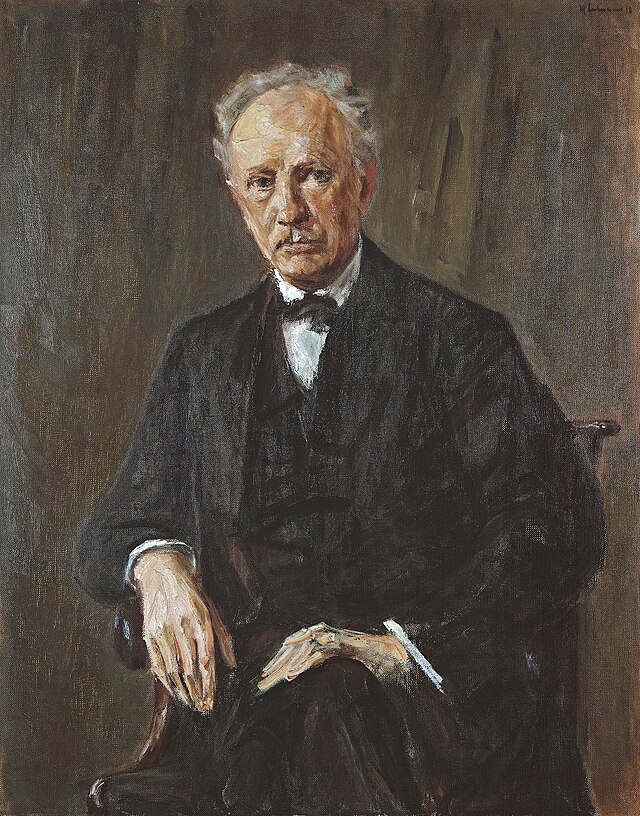
Richard Strauss (1864–1949) — compositore german, periodo Verismo.
Trama di Die Frau ohne Schatten
The opera's story is set in the mythical empire of the Southeastern Islands and involves five principal characters: the Emperor (tenor), the Empress (soprano), her Nurse (mezzo-soprano), Barak, a lowly dyer (bass-baritone), and the Dyer's Wife (dramatic soprano). A sixth character, Keikobad, King of the Spirit Realm and father to the Empress, sets the plot in motion, but never appears on stage. The Empress is half human: she was captured by the Emperor in the form of a gazelle. She assumed human shape and he married her, but she has no shadow. This symbolizes her inability to bear children. Keikobad has decreed that unless the Empress gains a shadow before one year elapses after her human marriage, he will reclaim her as his daughter and the Emperor will turn to stone. Scene 1 It is dawn, outside the bedchambers of the Emperor and Empress. The Messenger of Keikobad arrives, and tells the Empress's nurse that the Empress must acquire a shadow within three days, or she will be forcibly returned to his realm, and the Emperor turned to stone. The Nurse is excited about the prospect of returning to the spirit world, since she hates humans and having to dwell with them. The Messenger leaves and the Emperor emerges from his bedchamber. He departs on a three-day hunting trip, seeking his favorite falcon, which he drove away for attacking a gazelle that later turned into the Empress. He leaves his wife to the Nurse's care. The Empress emerges from her chamber and reminisces about time…
Estratto dalla sezione Synopsis dell’articolo Wikipedia — testo rilasciato con licenza CC BY-SA 4.0. Leggi la trama completa →
Cast e personaggi di Die Frau ohne Schatten
12 personaggi documentati da Wikidata con indicazione del registro vocale:
- personThe One-Armed Man (Der Einarmige) (bass)
- personThe Emperor (tenor)
- personThe Guardian of the Threshold (countertenor)
- personBarak (bass-baritone)
- personA Voice From Above (Stimme von oben) (light tenor)
- personThe Empress (Wagnerian soprano)
- personThe Hunchback (Der Bucklige) (light tenor)
- personThe One-eyed Man (Der Einäugige) (high bass)
- personThe Nurse (dramatic mezzo-soprano)
- personThe Messenger of Keikobad (lyric baritone)
- personThe Dyer's Wife (Wagnerian soprano)
- personVoices of Three Town Watchmen
Libretto di Die Frau ohne Schatten
Il libretto è scritto da Hugo von Hofmannsthal.
Altre opere di Richard Strauss
- Ariadne auf Naxos
- Capriccio
- Des Esels Schatten
- Die ägyptische Helena
- Die Liebe der Danae
- Die schweigsame Frau
- Elektra
- Feuersnot
- Friedenstag
- Guntram
Dati sull’opera provenienti da Wikidata (CC0, pubblico dominio).