Tristan und Isolde
Tristan und Isolde è un’opera in german di Richard Wagner, rappresentata per la prima volta nel 1857.
Tristan und Isolde, WWV 90, is a music drama in three acts by Richard Wagner set to a German libretto by the composer, loosely based on Gottfried von Strassburg's medieval 12th-century romance Tristan and Iseult. First conceived in 1854, the music was composed between 1857 and 1859 and premiered at the Königliches Hoftheater und Nationaltheater in Munich on 10 June 1865, with Hans von Bülow conducting. While it is performed by opera companies, Wagner preferred the term Handlung for Tristan to distinguish its structure of continuous narrative flow as distinct from that of conventional opera at the time, which consisted of recitatives punctuated by showpiece arias, which Wagner regarded with great disdain.
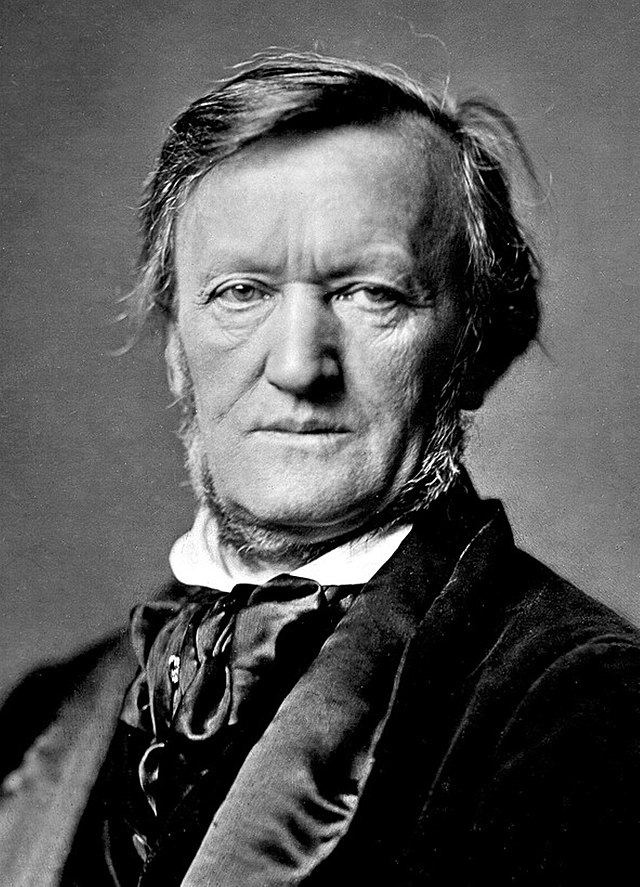
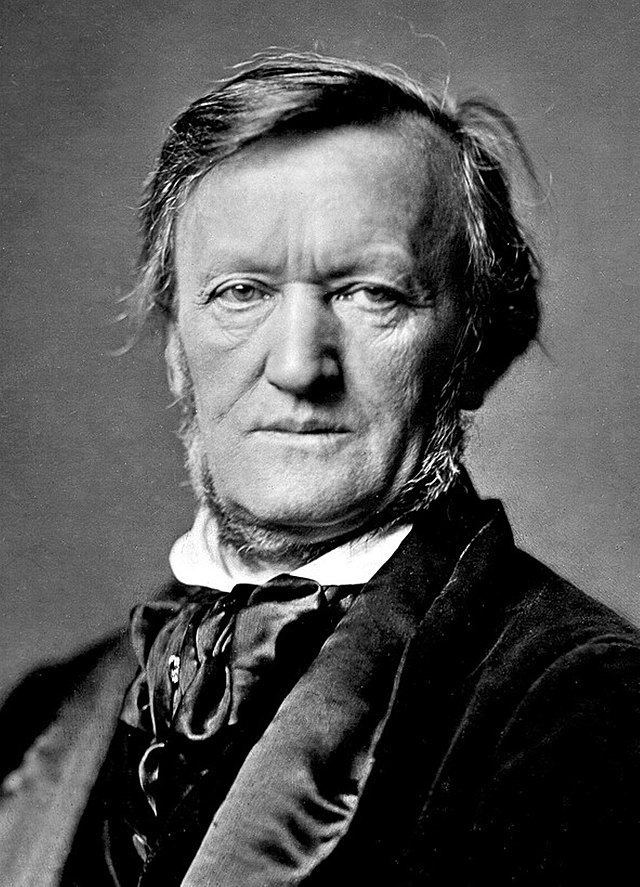
Richard Wagner (1813–1883) — compositore german, periodo Romantic. Prima rappresentazione di Tristan und Isolde nel 1857.
Trama di Tristan und Isolde
Isolde, promised to King Marke in marriage, and her handmaid, Brangäne, are quartered aboard Marke's nephew Tristan's ship, being transported to Marke's lands in Cornwall. A young sailor sings of a "wild Irish maid" ("Westwärts schweift der Blick"), which Isolde construes as a mocking reference to herself. In a furious outburst, she wishes the seas to rise up and sink the ship, killing herself and all on board ("Erwache mir wieder, kühne Gewalt"). Her scorn and rage are directed particularly at Tristan, the knight responsible for taking her to Marke, and Isolde sends Brangäne to command Tristan to appear before her ("Befehlen liess' dem Eigenholde"). Tristan refuses the request, claiming that his place is at the helm. His henchman, Kurwenal, answers more brusquely, saying that Isolde is in no position to command Tristan and reminding Brangäne that Isolde's fiancé, Morold, was killed by Tristan ("Herr Morold zog zu Meere her"). Brangäne returns to Isolde to relate these events, and Isolde, in what is termed the "narrative and curse", sadly tells her of how, after Morold died, she happened upon a stranger who called himself Tantris. Tantris was found mortally wounded in a barge ("von einem Kahn, der klein und arm") and Isolde used her healing powers to restore him to health. But she discovered during Tantris's recovery that he was actually Tristan, Morold's murderer. Isolde attempted to kill Tristan with his own sword as he lay helpless before her, but he looked not at the swor…
Estratto dalla sezione Synopsis dell’articolo Wikipedia — testo rilasciato con licenza CC BY-SA 4.0. Leggi la trama completa →
Cast e personaggi di Tristan und Isolde
9 personaggi documentati da Wikidata con indicazione del registro vocale:
- personMarke (bass)
- personTristan (tenor)
- personMelot (baryton-Martin)
- personA shepherd (tenor)
- personA young sailor (tenor)
- personBrangäne (soprano)
- personIsolde (soprano)
- personKurwenal (baritone)
- personA steersman (baritone)
Libretto di Tristan und Isolde
Il libretto è scritto da Richard Wagner. L’opera è classificata nel genere opera.
Da Tristan all’opera
Tristan und Isolde è un adattamento di Tristan — soggetto letterario di partenza per il libretto.
Opere contemporanee
Rappresentate nel decennio a cavallo del 1857, altre 6 opere del repertorio archiviato di compositori diversi:
- Aroldo — Giuseppe Verdi (1854)
- La nonne sanglante — Charles Gounod (1854)
- Le médecin malgré lui — Charles Gounod (1858)
- Don Procopio — Georges Bizet (1859)
- Faust — Charles Gounod (1859)
- Philémon et Baucis — Charles Gounod (1860)
Altre opere di Richard Wagner
- Das Liebesverbot
- Die Laune des Verliebten
- Die Walküre
- Männerlist grösser als Frauenlist
- Siegfried
- Siegfrieds Tod
- Tannhäuser
- The Flying Dutchman
- Die Hochzeit (1832)
- Die Feen (1833)
Dati sull’opera provenienti da Wikidata (CC0, pubblico dominio).