Lohengrin
Lohengrin è un’opera in german di Richard Wagner, rappresentata per la prima volta nel 1848, con 4 arie archiviate in Wikidata.
1848 1848-01-01
Romantic
4
Lohengrin, WWV 75, is a Romantic opera in three acts composed and written by Richard Wagner, first performed in 1850. The story of the eponymous character is taken from medieval German romance, notably the Parzival of Wolfram von Eschenbach, and its sequel Lohengrin, itself inspired by the epic of Garin le Loherain. It is part of the Knight of the Swan legend.
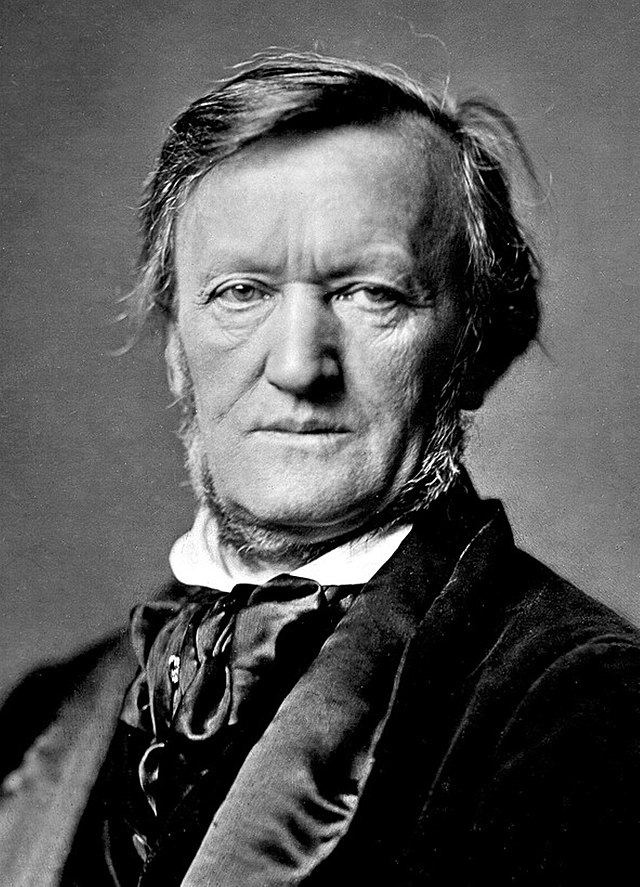
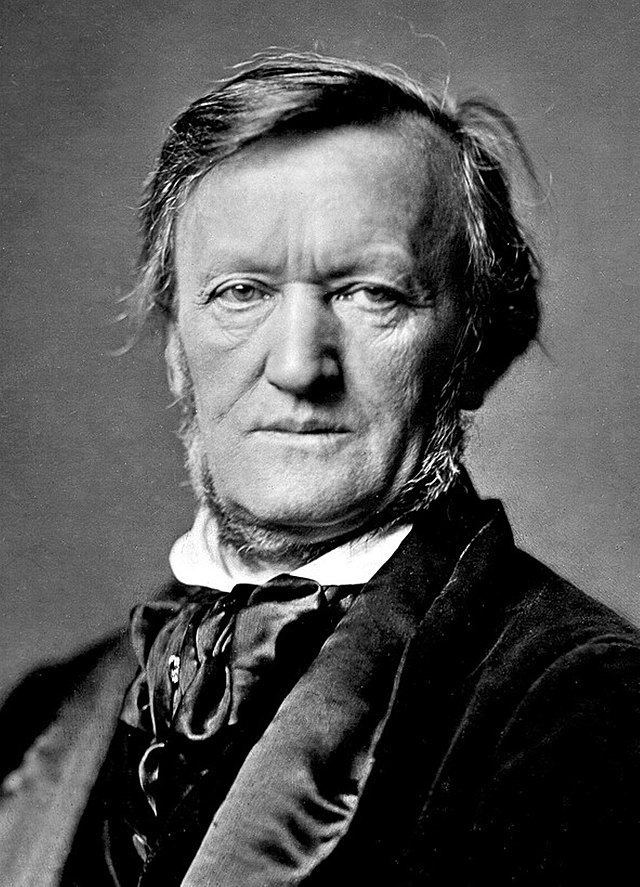
Richard Wagner (1813–1883) — compositore german, periodo Romantic. Prima rappresentazione di Lohengrin nel 1848.
Trama di Lohengrin
The people of the Brabant are divided by quarrels and political infighting; also, a devious hostile power left over from the region's pagan past is seeking to subvert the prevailing monotheistic government and to return Brabant to pagan rule. A mysterious knight, sent by God and possessing superhuman charisma and fighting ability, arrives to unite and strengthen the people, and to defend the innocent noblewoman Elsa from a false accusation of murder, but he imposes a condition: the people must follow him without knowing his identity. Elsa in particular must never ask his name, or his heritage, or his origin. The conspirators attempt to undermine her faith in her rescuer, to create doubt among the people, and to force him to leave. King Henry the Fowler has arrived in Brabant, where he has assembled the German tribes in order to expel the marauding Hungarians from his dominions. He also needs to settle a dispute involving the disappearance of the child-Duke Gottfried of Brabant. The Duke's guardian, Count Friedrich von Telramund, has accused the Duke's older sister, Elsa, of murdering her brother in order to become Duchess of Brabant. Telramund calls upon the King to punish Elsa and to make him the new Duke of Brabant. The King calls for Elsa to answer Telramund's accusation. Elsa does not answer the King's inquiries, only lamenting her brother's fate ("Einsam in trüben Tagen"). The King declares that he cannot resolve the matter and will leave it to God's judgment through ord…
Estratto dalla sezione Synopsis dell’articolo Wikipedia — testo rilasciato con licenza CC BY-SA 4.0. Leggi la trama completa →
Cast e personaggi di Lohengrin
10 personaggi documentati da Wikidata con indicazione del registro vocale:
- personHeinrich der Vogler (Henry the Fowler) (bass)
- personFour Noblemen of Brabant (tenor)
- personLohengrin (tenor)
- personElsa of Brabant (soprano)
- personFour Pages (alto)
- personFriedrich of Telramund (baritone)
- personThe King's Herald (baritone)
- personOrtrud (dramatic soprano)
- personDuke Gottfried
- personSaxon, Thuringian, and Brabantian counts and nobles, ladies of honor, pages, vassals, serfs
Libretto di Lohengrin
Il libretto è scritto da Richard Wagner. L’opera è classificata nel genere opera.
Da Parzival all’opera
Lohengrin è un adattamento di Parzival, Knight of the Swan, Nibelungenlied — soggetto letterario di partenza per il libretto.
Opere contemporanee
Rappresentate nel decennio a cavallo del 1848, altre 3 opere del repertorio archiviato di compositori diversi:
- Attila — Giuseppe Verdi (1846)
- Il trovatore — Giuseppe Verdi (1850)
- Rigoletto — Giuseppe Verdi (1850)
Arie principali di Lohengrin
in German · 1845
in German · 1845
in German · 1845
in German · 1845
Altre opere di Richard Wagner
- Das Liebesverbot
- Die Laune des Verliebten
- Die Walküre
- Männerlist grösser als Frauenlist
- Siegfried
- Siegfrieds Tod
- Tannhäuser
- The Flying Dutchman
- Die Hochzeit (1832)
- Die Feen (1833)
Dati sull’opera provenienti da Wikidata (CC0, pubblico dominio).