Rigoletto
Rigoletto è un’opera in italian di Giuseppe Verdi, rappresentata per la prima volta nel 1850, con 4 arie archiviate in Wikidata.
1850 1850-01-01
Romantic
4
Rigoletto is an opera in three acts by Giuseppe Verdi. The Italian libretto was written by Francesco Maria Piave based on the 1832 play Le roi s'amuse by Victor Hugo. Despite serious initial problems with the Austrian censors who had control over northern Italian theatres at the time, the opera had a triumphant premiere at La Fenice in Venice on 11 March 1851.
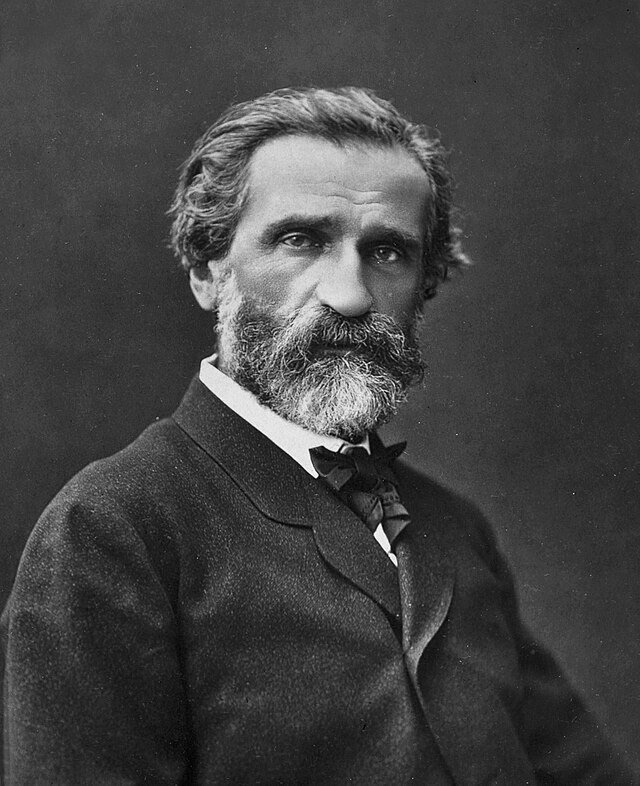
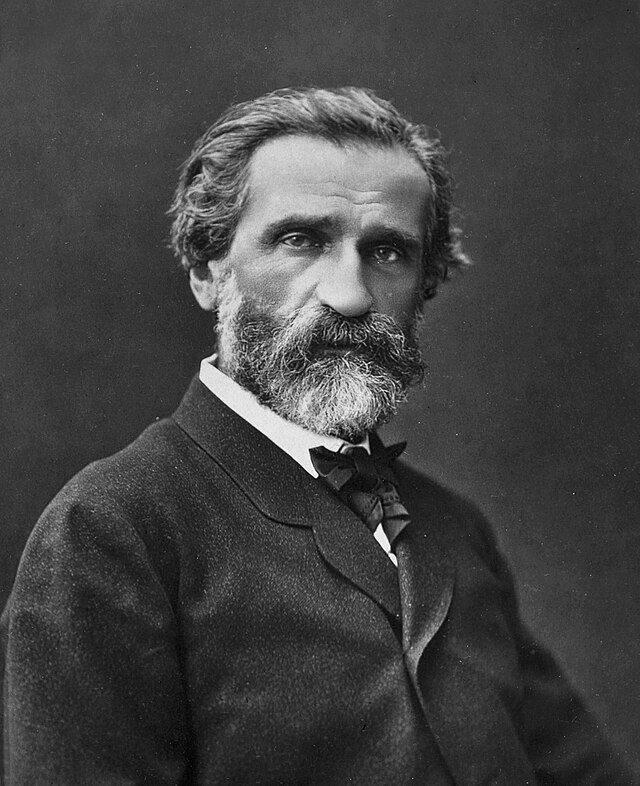
Giuseppe Verdi (1813–1901) — compositore italian, periodo Romantic. Prima rappresentazione di Rigoletto nel 1850.
Trama di Rigoletto
The opera duration is 2 hours 45 minutes, with two intermissions. Scene 1: Mantua. A magnificent hall in the ducal palace. Doors at the back open into other rooms, splendidly lit up. A crowd of lords and ladies in grand costumes are seen walking about in the rear rooms; page boys come and go. The festivities are at their height. Music is heard from offstage. The Duke and Borsa enter from a door in the back. At a ball in his palace, the Duke sings of a life of pleasure with as many women as possible, and mentions that he particularly enjoys cuckolding his courtiers: "Questa o quella" ("This woman or that"). He mentions to Borsa that he has seen an unknown beauty in church and desires to possess her, but he also wishes to seduce the Countess of Ceprano. Rigoletto, the Duke's hunchbacked court jester, mocks the husbands of the ladies to whom the Duke is paying attention, including the Count Ceprano. He humorously advises the Duke to get rid of Count Ceprano by prison, exile, or death. The Duke laughs indulgently, but Ceprano is not amused. Marullo, one of the guests at the ball, informs the courtiers that Rigoletto has a "lover", which astonishes them (Marullo is not aware that the "lover" is actually Rigoletto's daughter). The courtiers, at Ceprano's suggestion, resolve to take vengeance on Rigoletto for making fun of them. The festivities are interrupted by the arrival of the elderly Count Monterone, whose daughter the Duke had seduced. Rigoletto provokes him further by making…
Estratto dalla sezione Synopsis dell’articolo Wikipedia — testo rilasciato con licenza CC BY-SA 4.0. Leggi la trama completa →
Cast e personaggi di Rigoletto
14 personaggi documentati da Wikidata con indicazione del registro vocale:
- personCount Ceprano (baritone)
- personSparafucile (bass)
- personA Court Usher (bass)
- personDuke of Mantua (tenor)
- personMatteo Borsa (tenor)
- personGilda (soprano)
- personCountess Ceprano (mezzo-soprano)
- personA Page (mezzo-soprano)
- personRigoletto (baritone)
- personCount Monterone (baritone)
- personMarullo (baritone)
- personGiovanna (mezzo-soprano)
- personMaddalena (mezzo-soprano)
- personCourtisans
Libretto di Rigoletto
Il libretto è scritto da Francesco Maria Piave. L’opera è classificata nel genere opera.
Da Le roi s'amuse all’opera
Rigoletto è un adattamento di Le roi s'amuse — soggetto letterario di partenza per il libretto.
Arie principali di Rigoletto
Bella figlia dell’amore
mictenor
in Italian · 1850
in Italian · 1850
La donna è mobile
mictenor
Personaggio Luciano Pavarotti · in Italian · 1850
Questa o quella
mictenor
in Italian · 1850
Altre opere di Giuseppe Verdi
- Alzira
- Gustavo III
- I due Foscari
- I Lombardi alla prima crociata
- I masnadieri
- I vespri siciliani
- Il corsaro
- Jérusalem
- La battaglia di Legnano
- La forza del destino
Dati sull’opera provenienti da Wikidata (CC0, pubblico dominio).