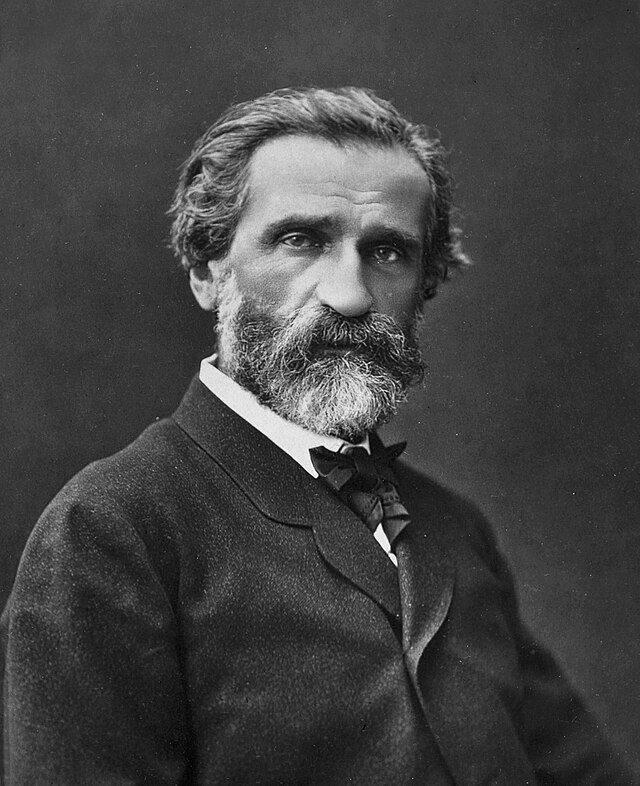
Jérusalem
Jérusalem è un’opera in french di Giuseppe Verdi.
Jérusalem is a grand opera in four acts by Giuseppe Verdi. The libretto was to be an adaptation and partial translation of the composer's original 1843 Italian opera, I Lombardi alla prima crociata. It was the one opera which he regarded as the most suitable for being translated into French and, taking Eugène Scribe's advice, Verdi agreed that a French libretto was to be prepared by Alphonse Royer and Gustave Vaëz, who had written the libretto for Donizetti's most successful French opera, La favorite. The opera received its premiere performance at the Salle Le Peletier in Paris on 26 November 1847. The maiden production was designed by Paul Lormier (costumes), Charles Séchan, Jules Diéterle and Édouard Desplechin, and Charles-Antoine Cambon and Joseph Thierry.
Gustave Vaëz
grand opera
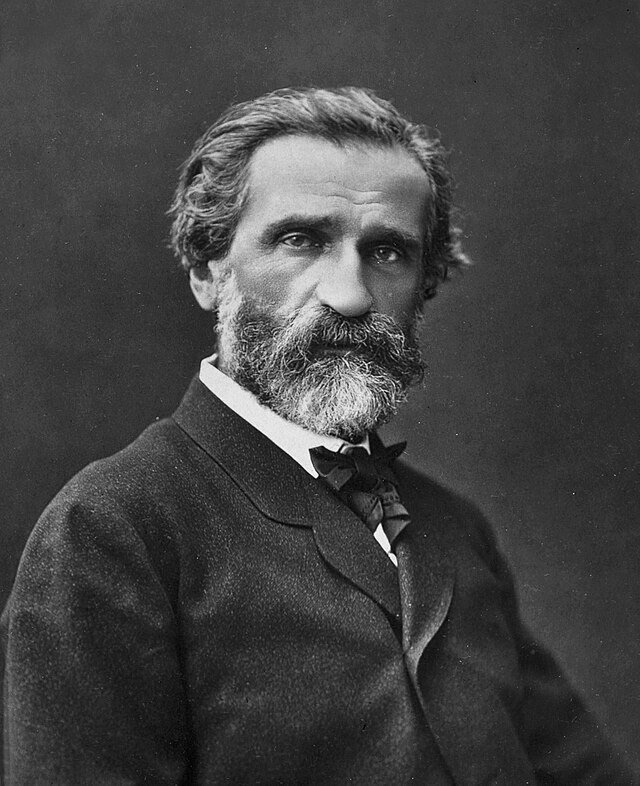
Giuseppe Verdi (1813–1901) — compositore italian, periodo Romantic.
Trama di Jérusalem
Scene 1: The palace of the Count of Toulouse Late at night Hélène is with her lover, Gaston. His family and hers have long been in conflict, but on the following day and prior to Gaston's departure for the First Crusade, it has been agreed that there will be a solemn reconciliation between the two families. (Duet: Adieu, mon bien-aimé / "Farewell, my beloved!"). After he leaves, Hélène and her companion, Isaure, pray for Gaston's safety. Scene 2: The following morning outside the chapel The Count proclaims the reconciliation and gives Gaston Hélène's hand in marriage. However, standing to one side, Roger, the Count's brother is quietly furious, since he is in love with Hélène. He leaves, after which the Papal Legate announces that the Pope has appointed Gaston to lead the Crusade, Gaston swears to follow him and he is awarded the Count's white cloak as a symbol of his loyalty. They enter the chapel. Returning, Roger proclaims his hatred of Gaston (Aria: Oh dans l'ombre, dans la mystère / "Oh! In darkness and mystery remain hidden, guilty passion") and approaches a soldier with whom he has plotted to kill his rival. He instructs the soldier to kill the man who will not be wearing the white cloak. (Aria: Ah! Viens, démon, esprit du mal / "Ah, come, demon, spirit of evil"). From inside the chapel the sound of uproar is heard. The soldier-murderer rushes out pursued by others while Roger gloats in his triumph. But it is Gaston who emerges, announcing that the Count has been struc…
Estratto dalla sezione Synopsis dell’articolo Wikipedia — testo rilasciato con licenza CC BY-SA 4.0. Leggi la trama completa →
Cast e personaggi di Jérusalem
11 personaggi documentati da Wikidata con indicazione del registro vocale:
- personThe Emir of Ramla (bass)
- personRoger (bass)
- personAdhemar de Monteil (bass)
- personA Soldier (bass)
- personA Herald (bass)
- personGaston (tenor)
- personRaymond (tenor)
- personAn officer of the Emir (tenor)
- personHélène (soprano)
- personIsaure (soprano)
- personThe Count of Toulouse (baritone)
Libretto di Jérusalem
Il libretto è scritto da Alphonse Royer, Gustave Vaëz — in totale 2 autori di libretto. L’opera è classificata nel genere opera, grand opera.
Da I Lombardi alla prima crociata all’opera
Jérusalem è un adattamento di I Lombardi alla prima crociata — soggetto letterario di partenza per il libretto.
Altre opere di Giuseppe Verdi
- Alzira
- Gustavo III
- I due Foscari
- I Lombardi alla prima crociata
- I masnadieri
- I vespri siciliani
- Il corsaro
- La battaglia di Legnano
- La forza del destino
- Les vêpres siciliennes
Dati sull’opera provenienti da Wikidata (CC0, pubblico dominio).