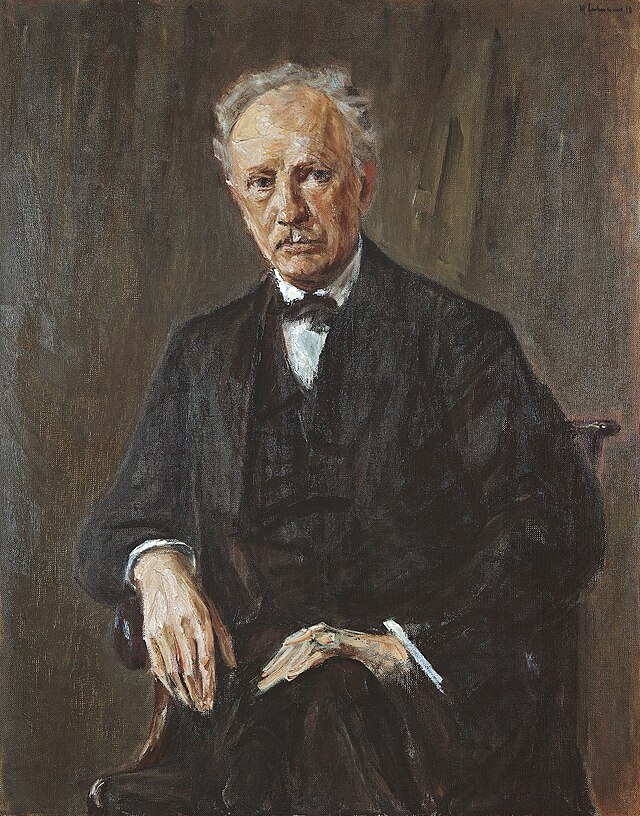
Der Rosenkavalier
Der Rosenkavalier è un’opera in austrian german di Richard Strauss, rappresentata per la prima volta nel 1910.
1910 1910-01-01
Verismo
Der Rosenkavalier, Op. 59, is a comic opera in three acts by Richard Strauss to an original German libretto by Hugo von Hofmannsthal. It is loosely adapted from Louvet de Couvrai's novel Les amours du chevalier de Faublas and Molière's comedy Monsieur de Pourceaugnac. It was first performed at the Königliches Opernhaus in Dresden on 26 January 1911 under the direction of Max Reinhardt, with Ernst von Schuch conducting. Until the premiere, the working title was Ochs auf Lerchenau.
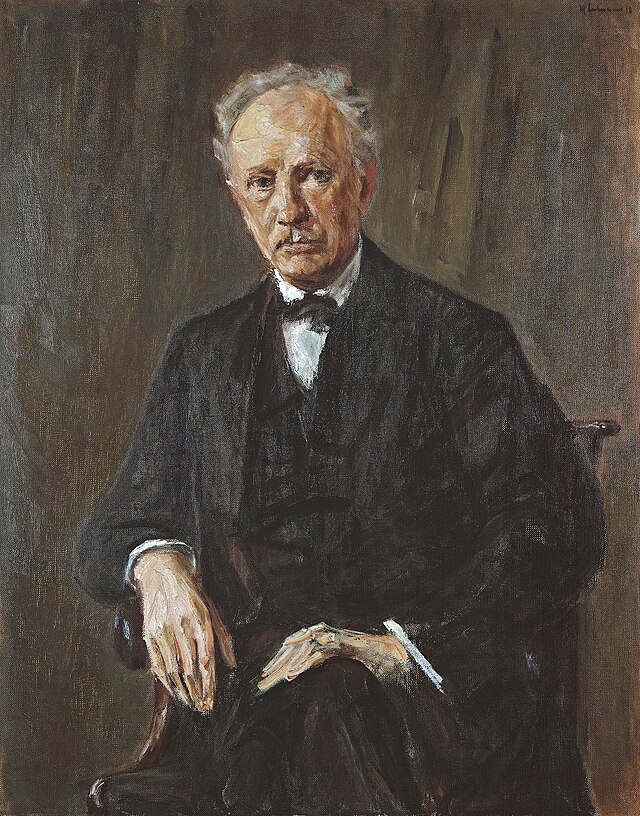
Richard Strauss (1864–1949) — compositore german, periodo Verismo. Prima rappresentazione di Der Rosenkavalier nel 1910.
Trama di Der Rosenkavalier
The Marschallin's bedroom The opera's Einleitung (Introduction) depicts a night of lovemaking between Princess Marie Therese von Werdenberg (known as the Marschallin, the title given to a Field Marshal's wife) and her much younger lover, Count Octavian Rofrano. The curtain rises to show them lounging in bed together just before daybreak ("Wie du warst! Wie du bist"). Loud voices are soon heard outside, and the Marschallin has Octavian hide, believing that her husband has returned early from a hunting trip. Octavian emerges in a skirt and bonnet ("Befehl'n fürstli' Gnad'n, i bin halt noch nit recht…") and tries to sneak away, but the Marschallin's country cousin, Baron Ochs auf Lerchenau, bursts in through the same door. The Baron is newly engaged to Sophie Faninal ("Selbstverständlich empfängt mich Ihro Gnaden"), a wealthy merchant's daughter. This does not keep him from making lewd comments at the disguised Octavian. Ochs has come to ask two favors: he wants to borrow his cousin's notary to write the marriage contract, and he wants her to recommend a young nobleman to serve as his Rosenkavalier ("Knight of the Rose"), who will deliver the traditional silver engagement rose to Sophie. The Marschallin instructs "Mariandel" to fetch Octavian's miniature portrait and present it to the Baron. Ochs readily accepts Octavian as his Rosenkavalier, deciding that the "maid" must be that young count's "bastard sister", then insists that the Marschallin allow "Mariandel" to come and wo…
Estratto dalla sezione Synopsis dell’articolo Wikipedia — testo rilasciato con licenza CC BY-SA 4.0. Leggi la trama completa →
Cast e personaggi di Der Rosenkavalier
20 personaggi documentati da Wikidata con indicazione del registro vocale:
- personBaron Ochs auf Lerchenau (bass)
- personA police inspector (bass)
- personA notary (bass)
- personFour lackeys (tenor)
- personFour waiters (tenor)
- personValzacchi (tenor)
- personThe Marschallin's Major-Domo (tenor)
- personFaninal's Major-Domo (tenor)
- personAn innkeeper (tenor)
- personAn Italian singer (tenor)
- personA vendor of pets (tenor)
- personThe Marschallin (soprano)
- personSophie von Faninal (soprano)
- personMarianne (mezzo-soprano)
- personA milliner (soprano)
- person3 Noble orphans (mezzo-soprano)
- personOctavian (baritone)
- personHerr von Faninal (baritone)
- personAnnina (contralto)
- personMohammed
Libretto di Der Rosenkavalier
Il libretto è scritto da Hugo von Hofmannsthal. L’opera è classificata nel genere comic opera.
Opere contemporanee
Rappresentate nel decennio a cavallo del 1910, altre 6 opere del repertorio archiviato di compositori diversi:
- Ariana — Jules Massenet (1907)
- Gloria — Francesco Cilea (1907)
- Thérèse — Jules Massenet (1907)
- Bacchus — Jules Massenet (1909)
- La fanciulla del West — Giacomo Puccini (1909)
- Don Quichotte — Jules Massenet (1910)
Altre opere di Richard Strauss
- Ariadne auf Naxos
- Capriccio
- Des Esels Schatten
- Die ägyptische Helena
- Die Frau ohne Schatten
- Die Liebe der Danae
- Die schweigsame Frau
- Elektra
- Feuersnot
- Friedenstag
Dati sull’opera provenienti da Wikidata (CC0, pubblico dominio).