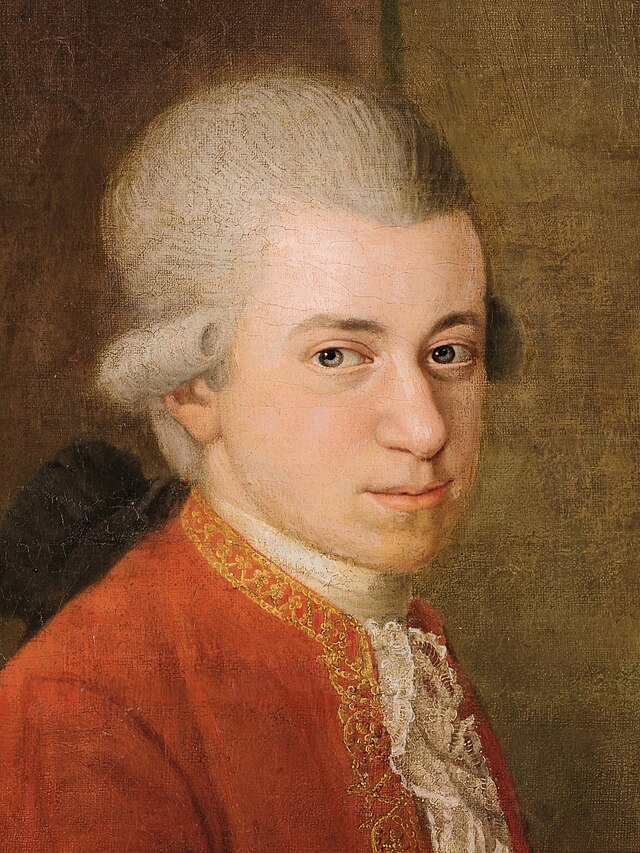
La finta giardiniera
La finta giardiniera è un’opera in italian di Wolfgang Amadeus Mozart, rappresentata per la prima volta nel 1774.
1774 1774-01-01
Classical
La finta giardiniera, K. 196, is an Italian-language opera by Wolfgang Amadeus Mozart. Mozart wrote it in Munich in January 1775 when he was 18 years old and it received its first performance on 13 January at the Salvator Theater in Munich. There is debate over the authorship of the libretto, written for Anfossi's opera the year before. It is often ascribed to Calzabigi, but some musicologists now attribute it to Giuseppe Petrosellini, though again it is questioned whether it is in the latter's style.
Giuseppe Petrosellini
Ranieri de' Calzabigi
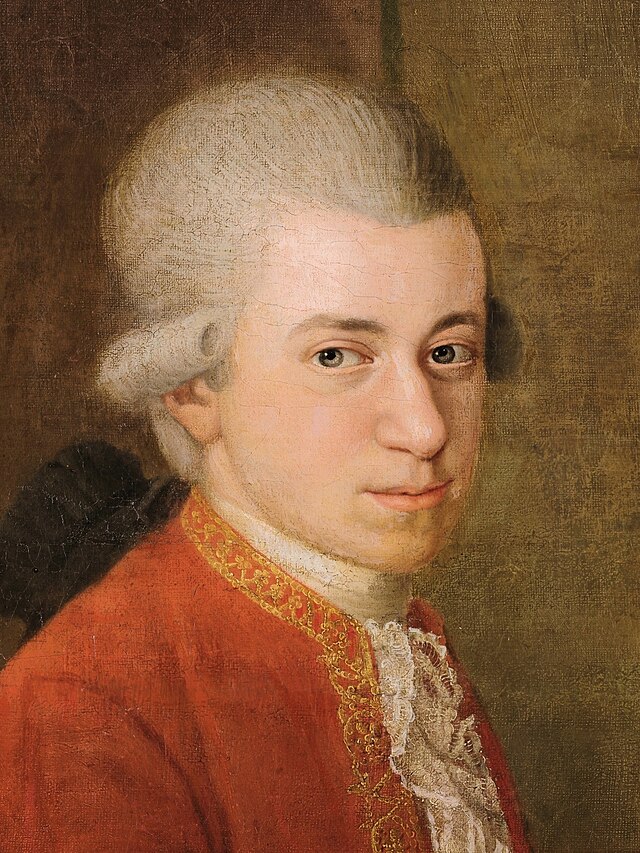
Wolfgang Amadeus Mozart (1756–1791) — compositore austrian, periodo Classical. Prima rappresentazione di La finta giardiniera nel 1774.
Trama di La finta giardiniera
Summary: The story follows Count Belfiore and the Marchioness Violante Onesti, who were lovers before Belfiore stabbed Violante in a fit of rage. The story begins with the revived Violante and her servant Roberto disguised as "Sandrina" and "Nardo," and quietly working in the mansion of the town Podestà. Violante discovers that Belfiore has become engaged to Arminda, the niece of the Podestà, and when Belfiore confesses his lingering love for Violante, Arminda jealously conspires to abduct the other woman. When Violante is found, she and Belfiore lose their minds and believe themselves to be Greek gods. When they regain their senses Violante forgives the Count and they fly to each other's arms. Arminda returns to Cavalier Ramiro, her spurned suitor, and Roberto finds love with Serpetta, another servant of the Podestà. A garden with a wide staircase leading to the mansion of the Podestà. The Podestà, Cavalier Ramiro, and Serpetta descend the staircase as Sandrina and Nardo work in the garden. Together they praise the lovely day, but their happiness is feigned ("Che lieto giorno"). Sandrina is wretched because Don Anchise, the Podestà, is in love with her. Nardo is frustrated by Serpetta, who teases him but refuses to respond to his affections. Ramiro is bitter after being tossed aside by Arminda, and, because she has set her own cap at the Podestà, Serpetta is angry at Sandrina. The Podestà attempts to console Ramiro, but Ramiro can think of none but Arminda ("Se l'augellin se…
Estratto dalla sezione Synopsis dell’articolo Wikipedia — testo rilasciato con licenza CC BY-SA 4.0. Leggi la trama completa →
Cast e personaggi di La finta giardiniera
7 personaggi documentati da Wikidata con indicazione del registro vocale:
- personDon Anchise (bass)
- personContino Belfiore (tenor)
- personRoberto (Nardo) (tenor)
- personMarchioness Violante Onesti (Sandrina) (soprano)
- personSerpetta (soprano)
- personArminda (soprano)
- personCavalier Ramiro (mezzo-soprano castrato)
Libretto di La finta giardiniera
Il libretto è scritto da Marco Coltellini, Giuseppe Petrosellini, Ranieri de' Calzabigi — in totale 3 autori di libretto. L’opera è classificata nel genere opera buffa.
Opere contemporanee
Rappresentate nel decennio a cavallo del 1774, altre 4 opere del repertorio archiviato di compositori diversi:
- Iphigénie en Aulide — Christoph Willibald von Gluck (1774)
- Orphée et Euridice — Christoph Willibald von Gluck (1776)
- Armida — Christoph Willibald von Gluck (1777)
- Armide — Christoph Willibald von Gluck (1777)
Altre opere di Wolfgang Amadeus Mozart
- Alexandre et Roxane
- Apollo et Hyacinthus
- Ascanio in Alba
- Covid fan tutte
- Der Schauspieldirektor
- Der Stein der Weisen
- Il pesceballo
- Il re pastore
- Il sogno di Scipione
- L'ape musicale
Dati sull’opera provenienti da Wikidata (CC0, pubblico dominio).