Ascanio in Alba
Ascanio in Alba è un’opera in italian di Wolfgang Amadeus Mozart.
Ascanio in Alba, K. 111, is a pastoral opera in two parts by Wolfgang Amadeus Mozart to an Italian libretto by Giuseppe Parini. It was commissioned by the Empress Maria Theresa for the wedding of her son, Archduke Ferdinand Karl, to Maria Beatrice d'Este on 15 October 1771.
pastoral opera
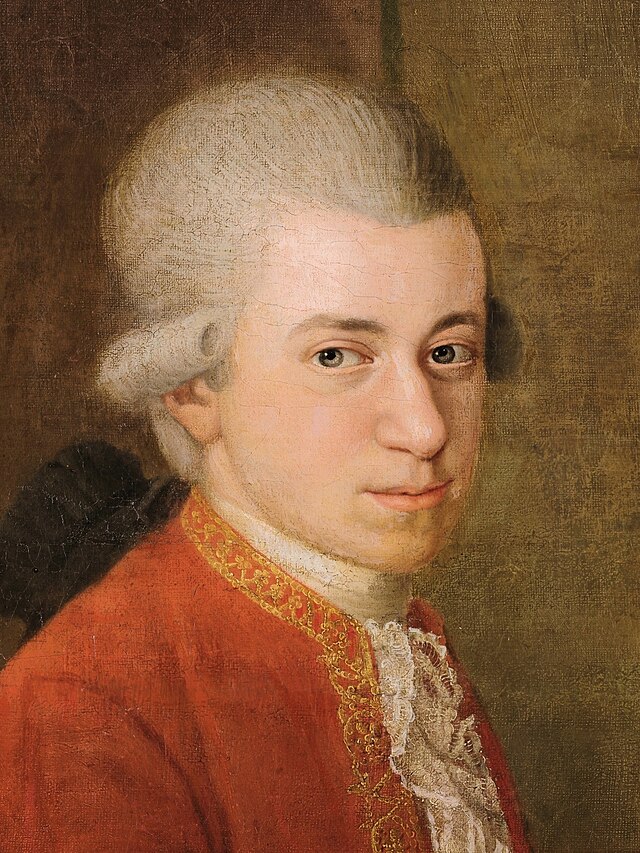
Wolfgang Amadeus Mozart (1756–1791) — compositore austrian, periodo Classical.
Trama di Ascanio in Alba
The opening scene introduces Venus and Ascanio, the son she had by Aeneas. (In most classical sources, Venus/Aphrodite is the mother of Aeneas.) The goddess vaunts the charms of Alba and invites her son to go and rule there. She urges him not to reveal his identity to Silvia, a nymph to whom he is betrothed, but to introduce himself to her under a false identity to test her virtue. While shepherds summon their promised ruler, Fauno reveals that the smiling face of Aceste, a priest, is a sign that the day will be a day of supreme happiness. Obeying the goddess, Ascanio pretends to be a foreigner attracted by the beauties of the place. Aceste tells the shepherds that their valley will be the site of a fine city and that they will have a sovereign, Ascanio, before the day is out. He also informs Silvia that she will be Ascanio's bride, but she replies that she is in love with a young man she has seen in a dream. The priest reassures her, saying the young man in her dream can be none other than Ascanio. Venus then appears to Ascanio and asks him to test the girl a little longer before revealing his true identity. Ascanio spots Silvia among the shepherds and tries to talk to her. The girl immediately recognizes the young man from her dreams. Fauno intervenes and suggests to “the foreigner” (Ascanio) that he should go off and announce the building of Alba in foreign parts. Thus convinced that the foreigner is not Ascanio, Silvia is deeply saddened. She finally decides to accept her…
Estratto dalla sezione Synopsis dell’articolo Wikipedia — testo rilasciato con licenza CC BY-SA 4.0. Leggi la trama completa →
Cast e personaggi di Ascanio in Alba
5 personaggi documentati da Wikidata con indicazione del registro vocale:
- personAceste (tenor)
- personSilvia (soprano)
- personVenere (Venus) (soprano)
- personAscanio (soprano)
- personFauno (soprano castrato)
Libretto di Ascanio in Alba
Il libretto è scritto da Giuseppe Parini. L’opera è classificata nel genere festa teatrale, pastoral opera.
Altre opere di Wolfgang Amadeus Mozart
- Alexandre et Roxane
- Apollo et Hyacinthus
- Covid fan tutte
- Der Schauspieldirektor
- Der Stein der Weisen
- Il pesceballo
- Il re pastore
- Il sogno di Scipione
- L'ape musicale
- L'oca del Cairo
Dati sull’opera provenienti da Wikidata (CC0, pubblico dominio).