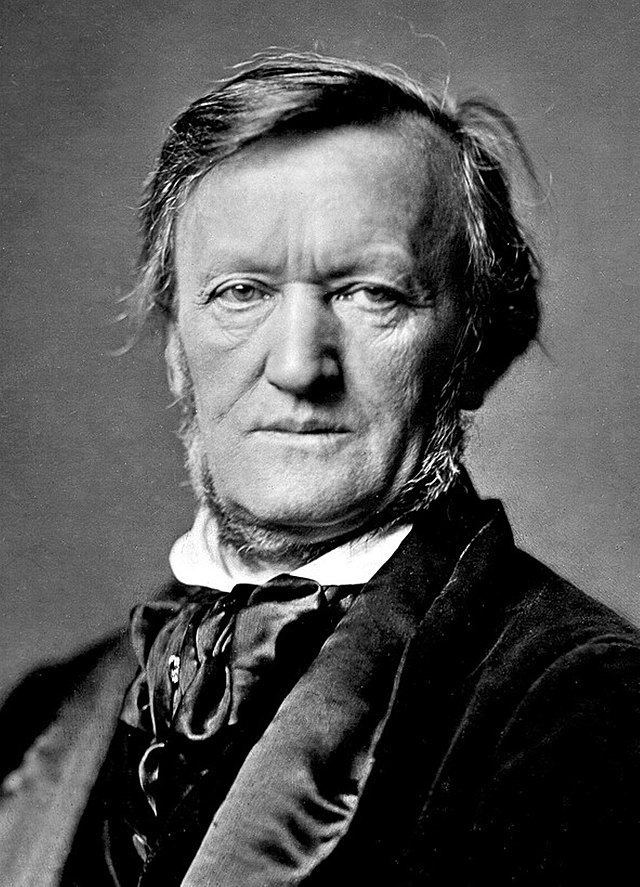
Götterdämmerung
Götterdämmerung è un’opera in german di Richard Wagner, rappresentata per la prima volta nel 1874.
Götterdämmerung, WWV 86D, is the last of the four epic music dramas that constitute Richard Wagner's cycle Der Ring des Nibelungen. It received its premiere at the Bayreuth Festspielhaus on 17 August 1876, as part of the first complete performance of the whole work.
Musikdrama
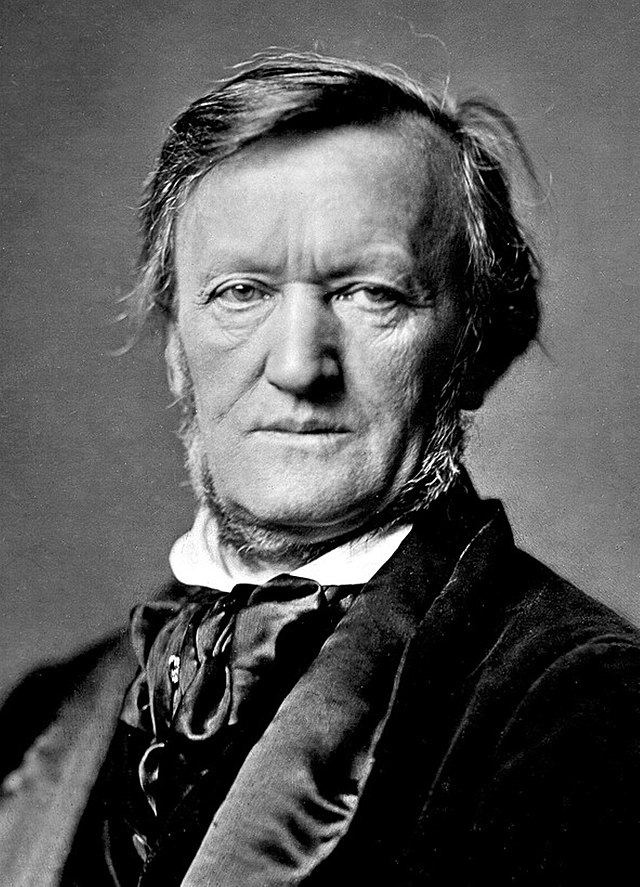
Richard Wagner (1813–1883) — compositore german, periodo Romantic. Prima rappresentazione di Götterdämmerung nel 1874.
Trama di Götterdämmerung
Prelude to the Prologue The three Norns, daughters of Erda, the goddess of Nature, gather beside Brünnhilde's rock, weaving the Rope of Destiny. From it they read of the past, the present, and of the future when Valhalla will be set on fire and the end of the gods will come ("Welch' Licht leuchtet dort?"). As their narration approaches the point when they want to sing about the fate of Alberich's ring and its curse and as the themes of Siegfried and the Curse of the ring are heard, the rope breaks. Lamenting the loss of their wisdom, the Norns disappear, returning to their mother Erda beneath the earth ("Zu End' ewiges Wissen!"). Orchestral Interlude – Tagesgrauen (Dawn) As day breaks, Siegfried and Brünnhilde emerge from their dwelling high on a mountaintop surrounded by magic fire ("Zu neuen Thaten, theurer Helde"). Brünnhilde sends Siegfried off to new heroic deeds, urging him to keep their love in mind. Siegfried proclaims himself to be simply an executor of her will, and as a pledge of his fidelity he gives her the ring of power that he took from Fafner's hoard. In a duet, both of them extoll their loving bond, which nothing can untie, even when distance keeps them apart ("O! heilige Götter!"). Bearing Brünnhilde's shield and mounting her steed Grane, Siegfried then rides away. Orchestral Interlude – Siegfrieds Rheinfahrt (Siegfried's Rhine Journey) The act begins on the shores of the Rhine in the Hall of the Gibichungs, a people named after the deceased king Gibich. Gun…
Estratto dalla sezione Synopsis dell’articolo Wikipedia — testo rilasciato con licenza CC BY-SA 4.0. Leggi la trama completa →
Cast e personaggi di Götterdämmerung
13 personaggi documentati da Wikidata con indicazione del registro vocale:
- personHagen (bass)
- personSiegfried (tenor)
- personBrünnhilde (soprano)
- personWellgunde (mezzo-soprano)
- personWoglinde (soprano)
- personGutrune (soprano)
- personThird Norn (soprano)
- personAlberich (baritone)
- personGunther (baritone)
- personFloßhilde (mezzo-soprano)
- personFirst Norn (contralto)
- personWaltraute (mezzo-soprano)
- personSecond Norn (mezzo-soprano)
Libretto di Götterdämmerung
Il libretto è scritto da Richard Wagner. L’opera è classificata nel genere opera, Musikdrama.
Da Norse mythology all’opera
Götterdämmerung è un adattamento di Norse mythology — soggetto letterario di partenza per il libretto.
L’archivio documenta 3 altre opere derivate dallo stesso soggetto:
- Die Walküre — Richard Wagner
- Siegfried — Richard Wagner
- Das Rheingold — Richard Wagner (1852)
Opere contemporanee
Rappresentate nel decennio a cavallo del 1874, altre 6 opere del repertorio archiviato di compositori diversi:
- Aida — Giuseppe Verdi (1871)
- Djamileh — Georges Bizet (1871)
- Don César de Bazan — Jules Massenet (1872)
- Marie-Magdeleine — Jules Massenet (1873)
- Boris Godunov — Modest Petrovich Mussorgsky (1874)
- King and Charcoal Burner — Antonín Dvořák (1874)
Altre opere di Richard Wagner
- Das Liebesverbot
- Die Laune des Verliebten
- Die Walküre
- Männerlist grösser als Frauenlist
- Siegfried
- Siegfrieds Tod
- Tannhäuser
- The Flying Dutchman
- Die Hochzeit (1832)
- Die Feen (1833)
Dati sull’opera provenienti da Wikidata (CC0, pubblico dominio).