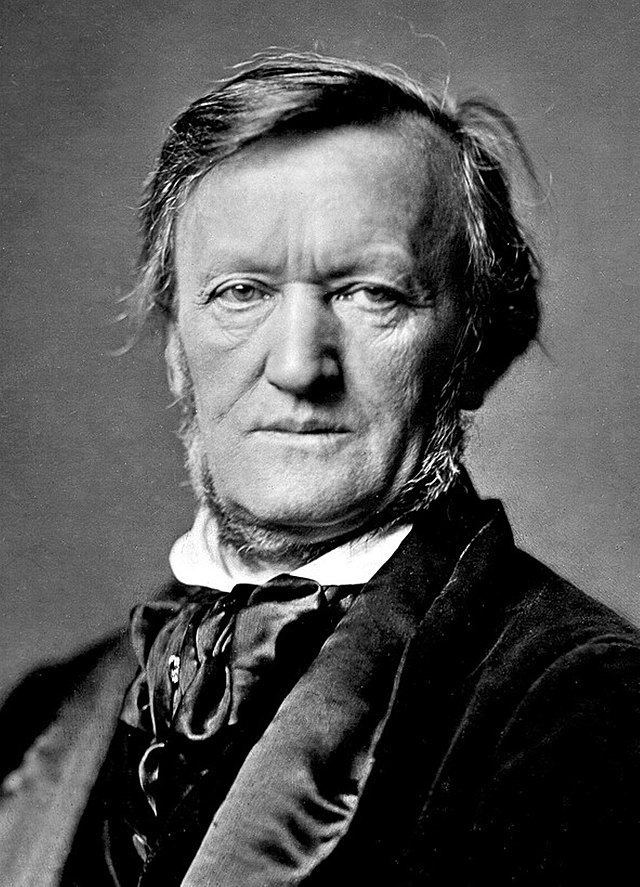
Die Meistersinger von Nürnberg
Die Meistersinger von Nürnberg è un’opera in german di Richard Wagner, rappresentata per la prima volta nel 1845.
Die Meistersinger von Nürnberg, WWV 96, is a music drama, or opera, in three acts, by Richard Wagner. It is the longest opera commonly performed, taking nearly four and a half hours, not counting two breaks between acts, and is traditionally not cut. With Hans von Bülow conducting, it was first performed on 21 June 1868 at the National Theater in Munich, today home of Bavarian State Opera.
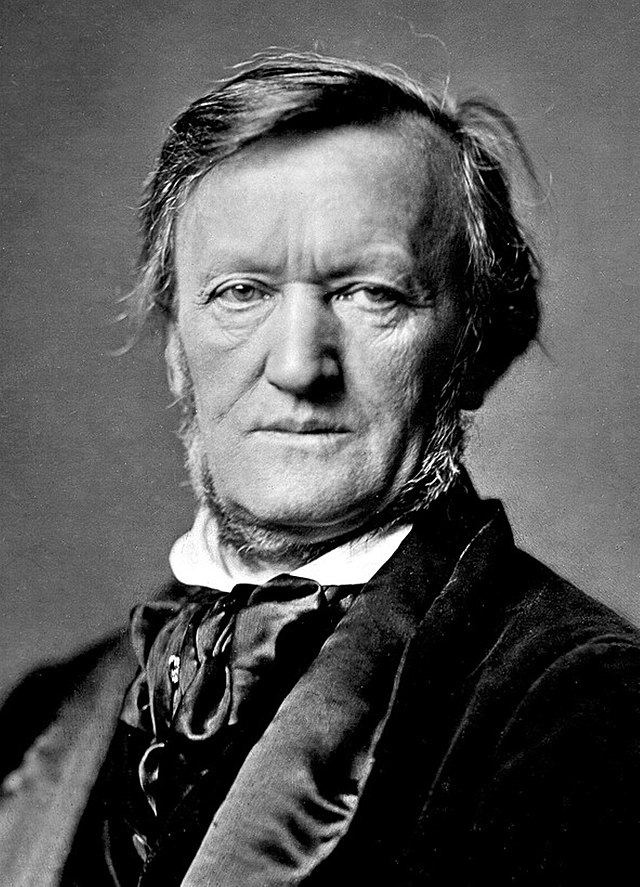
Richard Wagner (1813–1883) — compositore german, periodo Romantic. Prima rappresentazione di Die Meistersinger von Nürnberg nel 1845.
Trama di Die Meistersinger von Nürnberg
Nuremberg, towards the middle of the sixteenth century. Prelude Scene 1: Interior of Katharinenkirche (St. Catherine's Church) in Nuremberg, Saint John's Eve or Midsummer's Eve, June 23 After the prelude, a church service is just ending with a singing of Da zu dir der Heiland kam (When the Saviour came to thee), an impressive pastiche of a Lutheran chorale, as Walther von Stolzing, a young knight from Franconia, addresses Eva Pogner, whom he had met earlier, and asks her if she is engaged to anyone. Eva and Walther have fallen in love at first sight, but she informs him that her father, the goldsmith and mastersinger Veit Pogner, has arranged to give her hand in marriage to the winner of the guild's song contest on Saint John's Day (Midsummer's Day), tomorrow. Eva's maid, Magdalena, gets David, Hans Sachs's apprentice, to tell Walther about the mastersingers' art. The hope is for Walther to qualify as a mastersinger during the guild meeting, traditionally held in the church after Mass, and thus earn a place in the song contest despite his utter ignorance of the master-guild's rules and conventions. Scene 2 As the other apprentices set up the church for the meeting, David warns Walther that it is not easy to become a mastersinger; it takes many years of learning and practice. David gives a confusing lecture on the mastersingers' rules for composing and singing. (Many of the tunes he describes were real master-tunes from the period.) Walther is confused by the complicated rules…
Estratto dalla sezione Synopsis dell’articolo Wikipedia — testo rilasciato con licenza CC BY-SA 4.0. Leggi la trama completa →
Cast e personaggi di Die Meistersinger von Nürnberg
17 personaggi documentati da Wikidata con indicazione del registro vocale:
- personVeit Pogner (bass)
- personKonrad Nachtigall (soprano)
- personFritz Kothner (soprano)
- personHans Schwarz (baritone)
- personHermann Ortel (bass)
- personHans Foltz (soprano)
- personA Nightwatchman (bass-baritone)
- personKunz Vogelgesang (soprano)
- personBalthasar Zorn (baritone)
- personUlrich Eisslinger (tenor)
- personAugustin Moser (baritone)
- personWalther von Stolzing (Heldentenor)
- personDavid (tenor)
- personEva (soprano)
- personHans Sachs (bass-baritone)
- personMagdalena (soprano)
- personSixtus Beckmesser (baritone)
Libretto di Die Meistersinger von Nürnberg
Il libretto è scritto da Richard Wagner. L’opera è classificata nel genere opera.
Opere contemporanee
Rappresentate nel decennio a cavallo del 1845, altre 4 opere del repertorio archiviato di compositori diversi:
- Don Pasquale — Gaetano Donizetti (1842)
- Ernani — Giuseppe Verdi (1843)
- Giovanna d'Arco — Giuseppe Verdi (1844)
- Attila — Giuseppe Verdi (1846)
Altre opere di Richard Wagner
- Das Liebesverbot
- Die Laune des Verliebten
- Die Walküre
- Männerlist grösser als Frauenlist
- Siegfried
- Siegfrieds Tod
- Tannhäuser
- The Flying Dutchman
- Die Hochzeit (1832)
- Die Feen (1833)
Dati sull’opera provenienti da Wikidata (CC0, pubblico dominio).