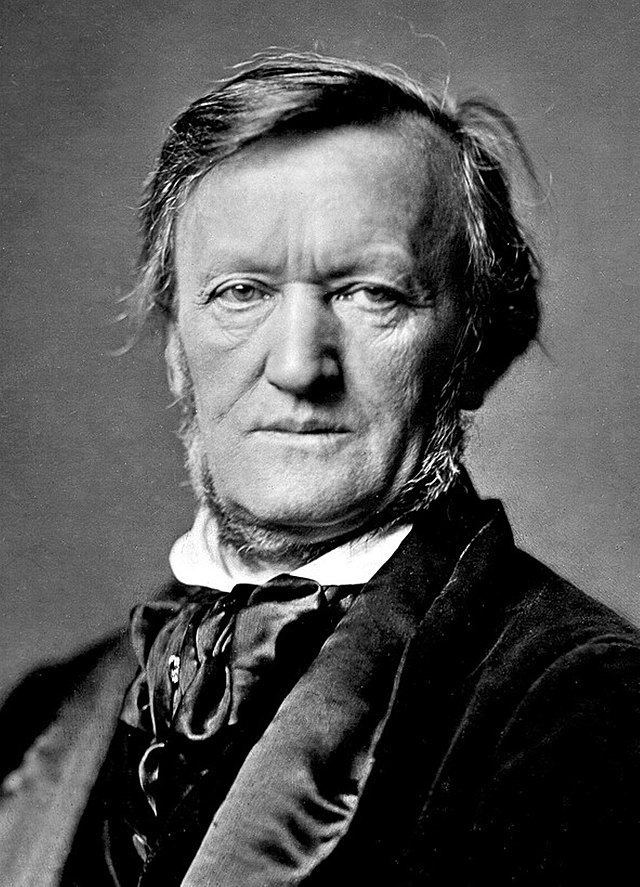
Der Ring des Nibelungen
Der Ring des Nibelungen è un’opera in german di Richard Wagner, rappresentata per la prima volta nel 1874, con 4 arie archiviate in Wikidata.
1874 1874-01-01
Romantic
4
Der Ring des Nibelungen, WWV 86, is a cycle of four German-language epic music dramas composed by Richard Wagner. The works are based loosely on characters from Germanic heroic legend, namely Norse legendary sagas and the Nibelungenlied. The composer termed the cycle a "Bühnenfestspiel", structured in three days preceded by a Vorabend. It is often referred to as the Ring cycle, Wagner's Ring, or simply The Ring.
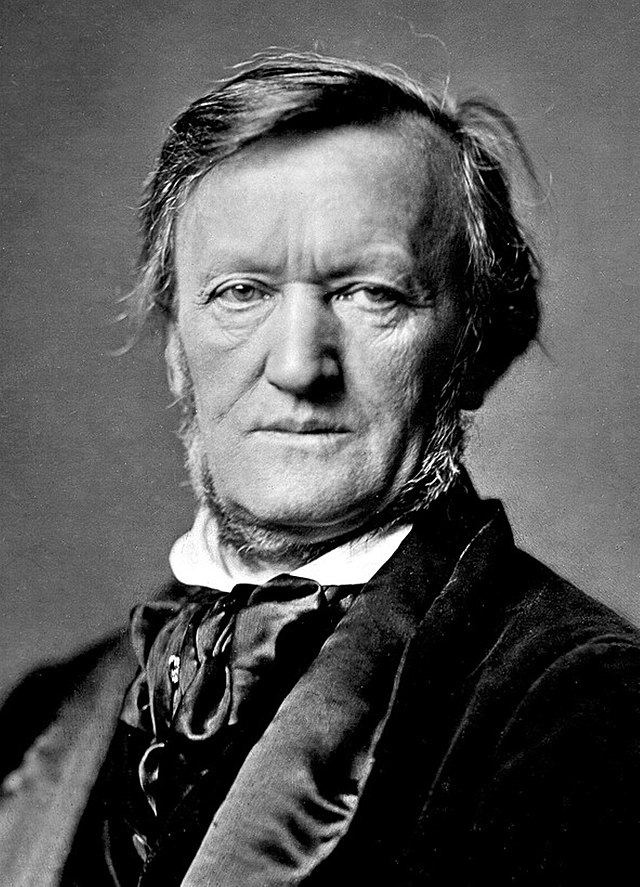
Richard Wagner (1813–1883) — compositore german, periodo Romantic. Prima rappresentazione di Der Ring des Nibelungen nel 1874.
Trama di Der Ring des Nibelungen
The plot revolves around a magic ring that grants the power to rule the world, forged by the Nibelung dwarf Alberich from gold he stole from the Rhine maidens in the river Rhine. With the assistance of the god Loge, Wotan – the chief of the gods – steals the ring from Alberich, but is forced to hand it over to the giants Fafner and Fasolt in payment for building the home of the gods, Valhalla, or they will take Freia, who provides the gods with the golden apples that keep them young. Wotan's schemes to regain the ring, spanning generations, drive much of the action in the story. His grandson, the mortal Siegfried, wins the ring by slaying Fafner (who slew Fasolt for the ring) – as Wotan intended – but is eventually betrayed and slain as a result of the intrigues of Alberich's son Hagen, who wants the ring for himself. Finally, the Valkyrie Brünnhilde – Siegfried's lover and Wotan's daughter who lost her immortality for defying her father in an attempt to save Siegfried's father Sigmund – returns the ring to the Rhine maidens as she commits suicide on Siegfried's funeral pyre. Hagen is drowned as he attempts to recover the ring. In the process, the gods and Valhalla are destroyed. Wagner created the story of the Ring by fusing elements from many German and Scandinavian myths and folk-tales. The Old Norse Edda supplied much of the material for Das Rheingold, while Die Walküre was largely based on the Völsunga saga. Siegfried contains elements from the Eddur, the Völsunga saga a…
Estratto dalla sezione Synopsis dell’articolo Wikipedia — testo rilasciato con licenza CC BY-SA 4.0. Leggi la trama completa →
Libretto di Der Ring des Nibelungen
Il libretto è scritto da Richard Wagner.
Da Völsunga saga all’opera
Der Ring des Nibelungen è un adattamento di Völsunga saga, Þiðreks saga, Edda, Nibelungenlied — soggetto letterario di partenza per il libretto.
Opere contemporanee
Rappresentate nel decennio a cavallo del 1874, altre 6 opere del repertorio archiviato di compositori diversi:
- Aida — Giuseppe Verdi (1871)
- Djamileh — Georges Bizet (1871)
- Don César de Bazan — Jules Massenet (1872)
- Marie-Magdeleine — Jules Massenet (1873)
- Boris Godunov — Modest Petrovich Mussorgsky (1874)
- King and Charcoal Burner — Antonín Dvořák (1874)
Arie principali di Der Ring des Nibelungen
in German · 1848
in German · 1848
in German · 1848
in German · 1848
Altre opere di Richard Wagner
- Das Liebesverbot
- Die Laune des Verliebten
- Die Walküre
- Männerlist grösser als Frauenlist
- Siegfried
- Siegfrieds Tod
- Tannhäuser
- The Flying Dutchman
- Die Hochzeit (1832)
- Die Feen (1833)
Dati sull’opera provenienti da Wikidata (CC0, pubblico dominio).