The Magic Flute
The Magic Flute è un’opera in german di Wolfgang Amadeus Mozart, rappresentata per la prima volta nel 1791, con 5 arie archiviate in Wikidata.
1791 1791-01-01
Classical
5
The Magic Flute, K. 620, is an opera in two acts by Wolfgang Amadeus Mozart to a German libretto by Emanuel Schikaneder. It is a Singspiel, a popular form that included both singing and spoken dialogue. The work premiered on 30 September 1791 at Schikaneder's theatre, the Freihaus-Theater auf der Wieden in Vienna, just two months before Mozart's death. It was Mozart's last opera. It was an outstanding success from its first performances, and remains a staple of the opera repertory.
singspiel
micbass · 2
mictenor · 1
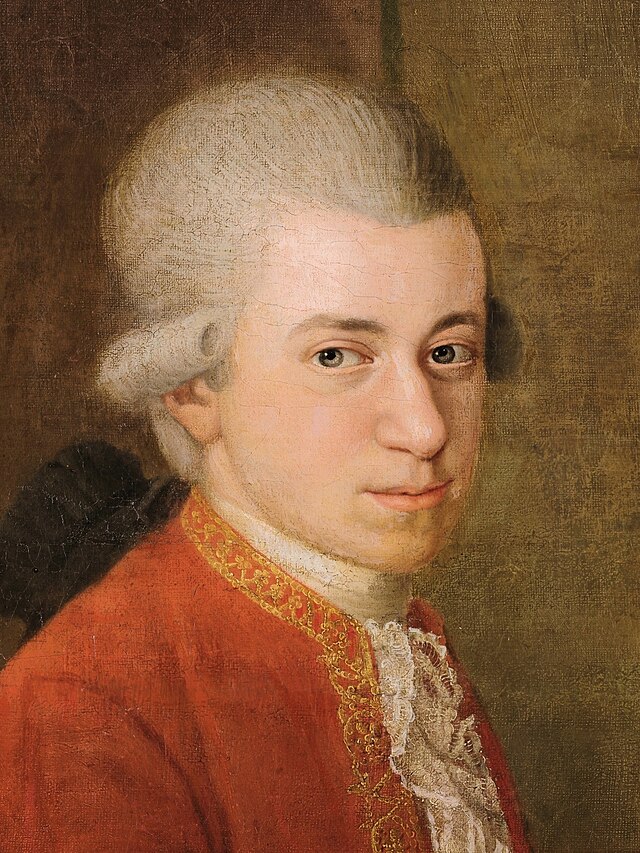
Wolfgang Amadeus Mozart (1756–1791) — compositore austrian, periodo Classical. Prima rappresentazione di The Magic Flute nel 1791.
Trama di The Magic Flute
The overture, composed after the other parts of the opera were complete, begins with a solemn three-chord sequence from the brass, associated with the Priests of the Temple of Wisdom. (The number three is highly significant in Freemasonry and recurs as the number of ladies, boys and temples.) It transitions in an adagio to a lively fugue in E-flat major. Halfway through, there is a false ending. After another three-chord brass sequence, the fugue resumes in E-flat minor, returning to E-flat major. Tamino, a handsome prince lost in a distant land, is pursued by a serpent and asks the gods to save him (aria: "Zu Hilfe! Zu Hilfe!" / Help! Help!, segued into trio "Stirb, Ungeheuer, durch uns're Macht!" / Die, monster, by our might!). He faints, and three ladies, attendants of the Queen of the Night, appear and kill the serpent. They find the unconscious prince extremely attractive, and each of them tries to persuade the other two to leave her alone with him. After arguing, they reluctantly decide to leave together. Tamino wakes up and is surprised to find himself still alive and the serpent dead. Papageno enters dressed as a bird. He describes his life as a bird-catcher, complaining he has no wife or girlfriend (aria: "Der Vogelfänger bin ich ja" / The birdcatcher am I indeed). Tamino introduces himself to Papageno, thinking Papageno killed the serpent. Papageno happily takes the credit – claiming he strangled it with his bare hands. The three ladies suddenly reappear and instead…
Estratto dalla sezione Synopsis dell’articolo Wikipedia — testo rilasciato con licenza CC BY-SA 4.0. Leggi la trama completa →
Cast e personaggi di The Magic Flute
20 personaggi documentati da Wikidata con indicazione del registro vocale:
- personPapageno (baritone)
- personSarastro (basso profondo)
- personTwo armoured men (tenor)
- personSpeaker of the temple (bass)
- personFirst priest (tenor)
- personSecond priest (tenor)
- personTamino (tenor)
- personMonostatos (tenor)
- personThree slaves (tenor)
- personThird priest (tenor)
- personPamina (lyric soprano)
- personThe Queen of the Night (coloratura soprano)
- personPapagena (soprano)
- personLady 1 (soprano)
- personLady 3 (contralto)
- personLady 2 (soprano)
- personFirst child-spirit (boy soprano)
- personSecond child-spirit (boy soprano)
- personThird child-spirit (soprano)
- personPriests, women, people, slaves
Libretto di The Magic Flute
Il libretto è scritto da Emanuel Schikaneder. L’opera è classificata nel genere opera, singspiel.
Da libretto of The Magic Flute all’opera
The Magic Flute è un adattamento di libretto of The Magic Flute — soggetto letterario di partenza per il libretto.
Registri vocali in The Magic Flute
Le arie documentate sono distribuite su 3 registri vocali: soprano (2 arie), bass (2 arie), tenor (1 aria).
Arie principali di The Magic Flute
Der Hölle Rache kocht in meinem Herzen
micsoprano
in German · 1791
Der Vogelfänger bin ich ja
micbass
in German · 1791
Dies Bildnis ist bezaubernd schön
mictenor
in German · 1791
In diesen heil'gen Hallen
micbass
in German · 1791
O zittre nicht, mein lieber Sohn
micsoprano
in German · 1791
Altre opere di Wolfgang Amadeus Mozart
- Alexandre et Roxane
- Apollo et Hyacinthus
- Ascanio in Alba
- Covid fan tutte
- Der Schauspieldirektor
- Der Stein der Weisen
- Il pesceballo
- Il re pastore
- Il sogno di Scipione
- L'ape musicale
Dati sull’opera provenienti da Wikidata (CC0, pubblico dominio).