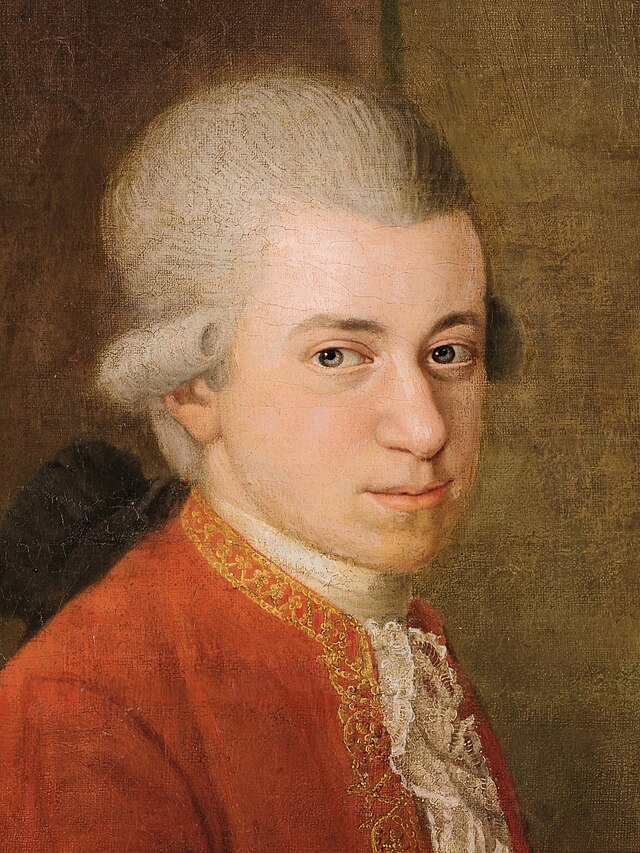
Idomeneo
Idomeneo è un’opera in italian di Wolfgang Amadeus Mozart, rappresentata per la prima volta nel 1780.
1780 1780-01-01
Classical
Idomeneo, re di Creta ossia Ilia e Idamante is an Italian-language opera seria by Wolfgang Amadeus Mozart. The libretto was adapted by Giambattista Varesco from a French text by Antoine Danchet, based on a 1705 play by Crébillion père, which had been set to music by André Campra as Idoménée in 1712. Mozart and Varesco were commissioned in 1780 by Karl Theodor, Elector of Bavaria for a court carnival. He probably chose the subject, though it may have been Mozart. The work premiered on 29 January 1781 at the Cuvilliés Theatre in Munich, Germany.
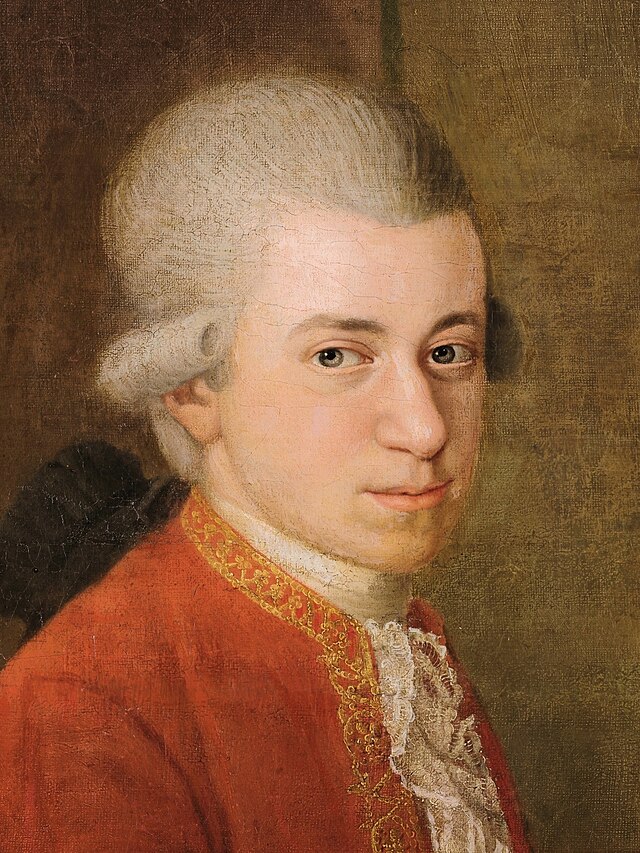
Wolfgang Amadeus Mozart (1756–1791) — compositore austrian, periodo Classical. Prima rappresentazione di Idomeneo nel 1780.
Trama di Idomeneo
The overture, in D major and common time, is in a modified sonata form in which the development is but a very short transition section connecting the exposition with the recapitulation. Other conventional hallmarks of the sonata form are apparent: the exposition modulates from the tonic (D major) to the dominant (A major), while the recapitulation is centred on the tonic. The overture concludes with a coda ending in D major chords. These chords, soft and tentative, turn out not to be a resolution of the overture in the tonic but chords in the dominant of G minor, which is the home key of the scene that immediately follows. Island of Crete, shortly after the Trojan War. Ilia, daughter of the defeated Trojan King Priam, has been taken to Crete after the war. She loves Prince Idamante, son of the Cretan King Idomeneo, but hesitates to acknowledge her love. Idamante frees the Trojan prisoners in a gesture of good will. He tells Ilia, who is rejecting his love, that it is not his fault that their fathers were enemies. Trojans and Cretans together welcome the return of peace, but Electra, daughter of the Greek King Agamemnon, is jealous of Ilia and does not approve of Idamante's clemency toward the enemy prisoners. Arbace, the king's confidant, brings news that Idomeneo has been lost at sea while returning to Crete from Troy. Electra, fearing that Ilia, a Trojan, will soon become Queen of Crete, feels the furies of the underworld rise up in her heart (aria: "Tutte nel cor vi sento,…
Estratto dalla sezione Synopsis dell’articolo Wikipedia — testo rilasciato con licenza CC BY-SA 4.0. Leggi la trama completa →
Cast e personaggi di Idomeneo
9 personaggi documentati da Wikidata con indicazione del registro vocale:
- personThe voice of the Oracle of Neptune (bass)
- personTwo Cretan women (mezzo-soprano)
- personIlia (soprano)
- personElettra (Electra) (soprano)
- personIdomeneo (Idomeneus) (tenor)
- personArbace (Arbaces) (tenor)
- personIdamante (Idamantes) (soprano castrato)
- personHigh priest of Neptune (tenor)
- personTwo Trojans
Libretto di Idomeneo
Il libretto è scritto da Giambattista Varesco. L’opera è classificata nel genere opera seria.
Opere contemporanee
Rappresentate nel decennio a cavallo del 1780, altre 3 opere del repertorio archiviato di compositori diversi:
- Armida — Christoph Willibald von Gluck (1777)
- Armide — Christoph Willibald von Gluck (1777)
- Iphigénie en Tauride — Christoph Willibald von Gluck (1779)
Altre opere di Wolfgang Amadeus Mozart
- Alexandre et Roxane
- Apollo et Hyacinthus
- Ascanio in Alba
- Covid fan tutte
- Der Schauspieldirektor
- Der Stein der Weisen
- Il pesceballo
- Il re pastore
- Il sogno di Scipione
- L'ape musicale
Dati sull’opera provenienti da Wikidata (CC0, pubblico dominio).