William Tell
William Tell è un’opera in french di Gioachino Rossini, rappresentata per la prima volta nel 1828.
William Tell is a French-language opera in four acts by Italian composer Gioachino Rossini to a libretto by Victor-Joseph Étienne de Jouy and L. F. Bis, based on Friedrich Schiller's play Wilhelm Tell, which, in turn, drew on the William Tell legend. The opera was Rossini's last, although he lived for nearly 40 more years. Fabio Luisi said that Rossini planned for Guillaume Tell to be his last opera even as he composed it. The often-performed overture in four sections features a depiction of a storm and a vivacious finale, the "March of the Swiss Soldiers".
Armand Marrast
Victor-Joseph Étienne de Jouy
grand opera
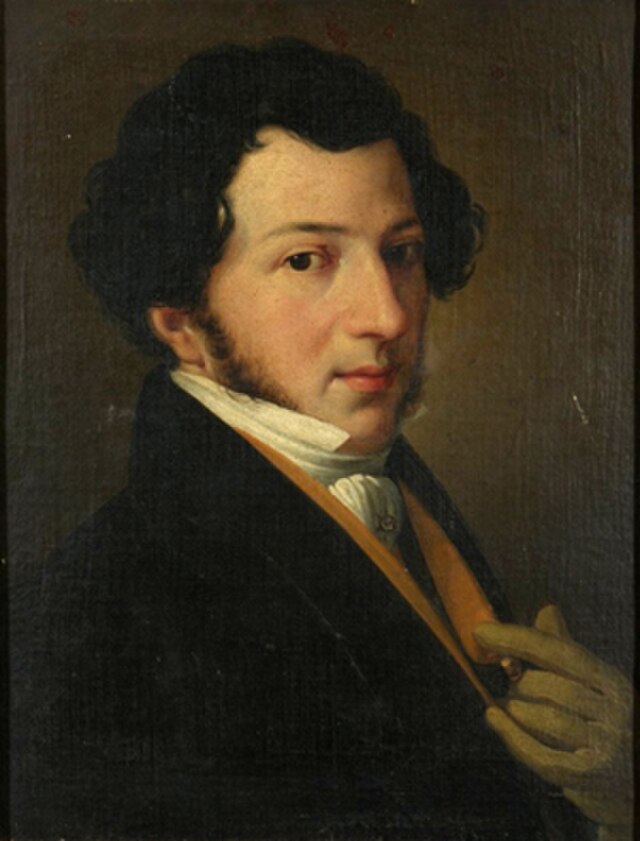
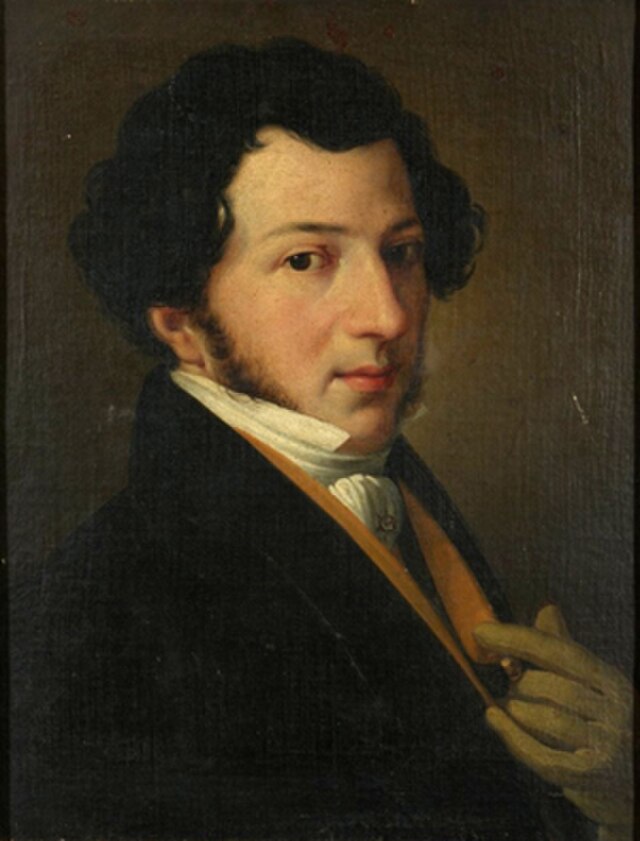
Gioachino Rossini (1792–1868) — compositore italian, periodo Romantic. Prima rappresentazione di William Tell nel 1828.
Trama di William Tell
By the shore of Lake Lucerne, at Bürglen in the canton of Uri It is the day of the Shepherd Festival, in May, near Lake Lucerne. The action opens on an idyllic scene, with the local peasants busily preparing chalets for three newly wedded couples, singing as they work (Quel jour serein le ciel présage – "What a serene day the sky foretells"). The fisherman, Ruodi, sings a gentle love song from his boat (to orchestral accompaniment from the harps and flutes). Tell stands apart from the general merriment and laments Switzerland's continued oppression by the Austrian Habsburgs (Il chante, et l'Helvétie pleure sa liberté – "He sings, and Helvetia mourns her liberty"). His wife and son add their own interpretation of Ruodi's song, presaging the coming nautical dramas. The activities are interrupted by the ranz des vaches resounding from the hills (often performed by off-stage horns, and echoing in its theme the ranz de vaches in the opera's overture). The horns also signal the arrival of Melchthal, a respected elder of the canton. He is persuaded by Hedwige to bless the couples at the celebration. However, his son Arnold, though of marriageable age, is not participating and is evidently uncomfortable. The entire on-stage cast sings in celebration (Célebrons tous en ce beau jour, le travail, l'hymen et l'amour – "Let all celebrate, on this glorious day, work, marriage and love"). Tell invites Melchthal into his chalet; before they move off, Melchthal chides his son for his failure …
Estratto dalla sezione Synopsis dell’articolo Wikipedia — testo rilasciato con licenza CC BY-SA 4.0. Leggi la trama completa →
Cast e personaggi di William Tell
12 personaggi documentati da Wikidata con indicazione del registro vocale:
- personWalter Furst (bass)
- personMelchtal (bass)
- personGesler (bass)
- personLeuthold (bass)
- personArnold Melchtal (tenor)
- personRodolphe (tenor)
- personRuodi (tenor)
- personA hunter (baritone)
- personJemmy (soprano)
- personMathilde (soprano)
- personGuillaume Tell (baritone)
- personHedwige (mezzo-soprano)
Libretto di William Tell
Il libretto è scritto da Hippolyte Bis, Armand Marrast, Victor-Joseph Étienne de Jouy — in totale 3 autori di libretto. L’opera è classificata nel genere opera, grand opera.
Opere contemporanee
Rappresentate nel decennio a cavallo del 1828, altre 6 opere del repertorio archiviato di compositori diversi:
- Il borgomastro di Saardam — Gaetano Donizetti (1827)
- Il giovedì grasso, o Il nuovo Pourceaugnac — Gaetano Donizetti (1828)
- La straniera — Vincenzo Bellini (1828)
- Anna Bolena — Gaetano Donizetti (1830)
- I Capuleti e i Montecchi — Vincenzo Bellini (1830)
- Gianni di Parigi — Gaetano Donizetti (1831)
Altre opere di Gioachino Rossini
- Adelaide di Borgogna
- Adina
- Armida
- Aureliano in Palmira
- Bianca e Falliero, o sia Il consiglio di tre
- Ciro in Babilonia
- Demetrio e Polibio
- Eduardo e Cristina
- Elisabetta, regina d'Inghilterra
- Ermione
Dati sull’opera provenienti da Wikidata (CC0, pubblico dominio).