Aureliano in Palmira
Aureliano in Palmira è un’opera in italian di Gioachino Rossini.
Aureliano in Palmira is an operatic dramma serio in two acts written by Gioachino Rossini to an Italian libretto in which the librettist was credited only by the initials "G. F. R." The libretto has generally been attributed to Felice Romani, but sometimes to the otherwise unknown Gian Francesco Romanelli. It has been suggested that the latter name may have resulted from a confusion of Romani with Luigi Romanelli, La Scala's house poet prior to Romani's appointment to the post.
Dramma per musica
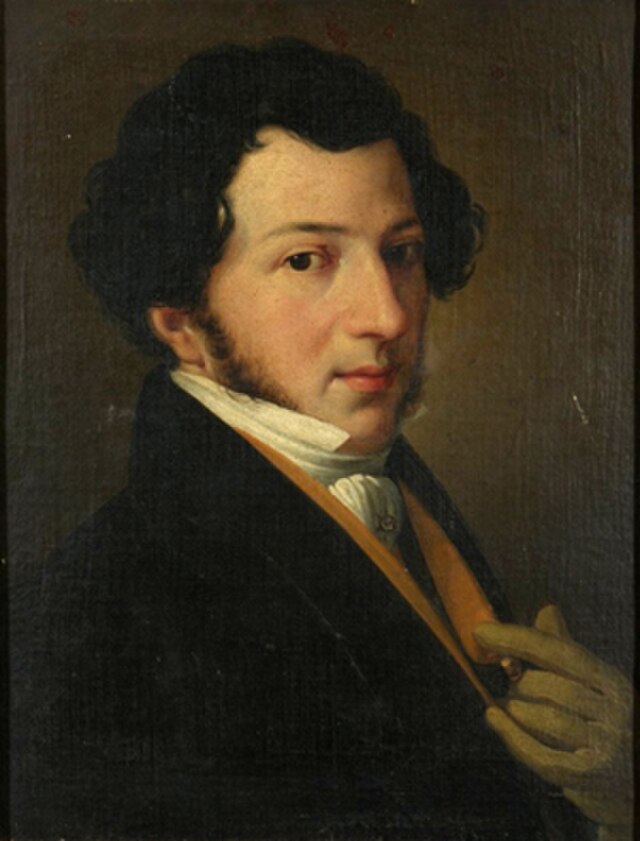
Gioachino Rossini (1792–1868) — compositore italian, periodo Romantic.
Trama di Aureliano in Palmira
Queen Zenobia, her lover Arsace, and the priests offer sacrifices in the Temple of Isis and pray for their deliverance from the approaching Roman army. General Oraspe enters to the strains of martial music and announces that Aureliano's Roman army is at the gates of Palmyra. Arsace pledges his Persian troops to defend the city. After a dramatic battle scene on the plains outside the city, the Persians are defeated. The Roman soldiers celebrate their victory. Aureliano arrives and addresses Arsace, now a prisoner. He responds to the Emperor with dignity and affirms his love for Zenobia, saying that he is prepared to die for her. Inside Palmyra's walls, Zenobia has hidden the kingdom's treasures in the vaults beneath the palace. She decides to make a last stand with her troops to save the city. She asks Aureliano for a truce so that she can speak with him and obtain the liberty of the prisoners, including Arsace. On Aureliano's refusal to free the prisoners, she asks to at least see Arsace for a last time. Zenobia and Arsace weep over their fate. Aureliano enters and promises to free Arsace on condition that he abandons Zenobia. Arsace refuses and is sentenced to death. The Roman and Palmyran armies prepare for a last battle. Palmyra has now been conquered by the Romans. Aureliano enters Zenobia's palace and offers his love to her, which she refuses. Meanwhile, Oraspe frees Arsace who then flees to the hills by the Euphrates river where he is sheltered by a group of shepherds. …
Estratto dalla sezione Synopsis dell’articolo Wikipedia — testo rilasciato con licenza CC BY-SA 4.0. Leggi la trama completa →
Libretto di Aureliano in Palmira
Il libretto è scritto da Felice Romani. L’opera è classificata nel genere opera, Dramma per musica.
Altre opere di Gioachino Rossini
- Adelaide di Borgogna
- Adina
- Armida
- Bianca e Falliero, o sia Il consiglio di tre
- Ciro in Babilonia
- Demetrio e Polibio
- Eduardo e Cristina
- Elisabetta, regina d'Inghilterra
- Ermione
- Il signor Bruschino
Dati sull’opera provenienti da Wikidata (CC0, pubblico dominio).