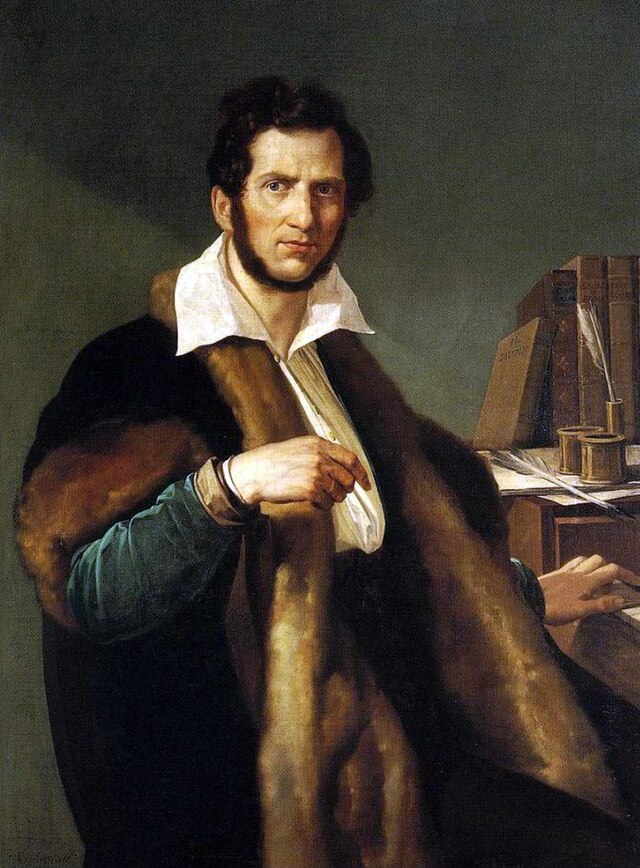
Il giovedì grasso, o Il nuovo Pourceaugnac
Il giovedì grasso, o Il nuovo Pourceaugnac è un’opera in italian di Gaetano Donizetti, rappresentata per la prima volta nel 1828.
Il giovedì grasso is a farsa in one act by Gaetano Donizetti, from a libretto by Domenico Gilardoni. The literal translation of the title is "Fat Thursday", a reference to Carnival celebration. The libretto was adapted from the French comedies Monsieur de Pourceaugnac by Molière and Le nouveau Pourceaugnac by Charles-Gaspard Delestre-Poirson and Eugène Scribe. The opera uses spoken dialogue rather than recitatives, and the buffo role is given in the Neapolitan language. The work premiered at the Teatro del Fondo in Naples on 26 February 1829.
farsa
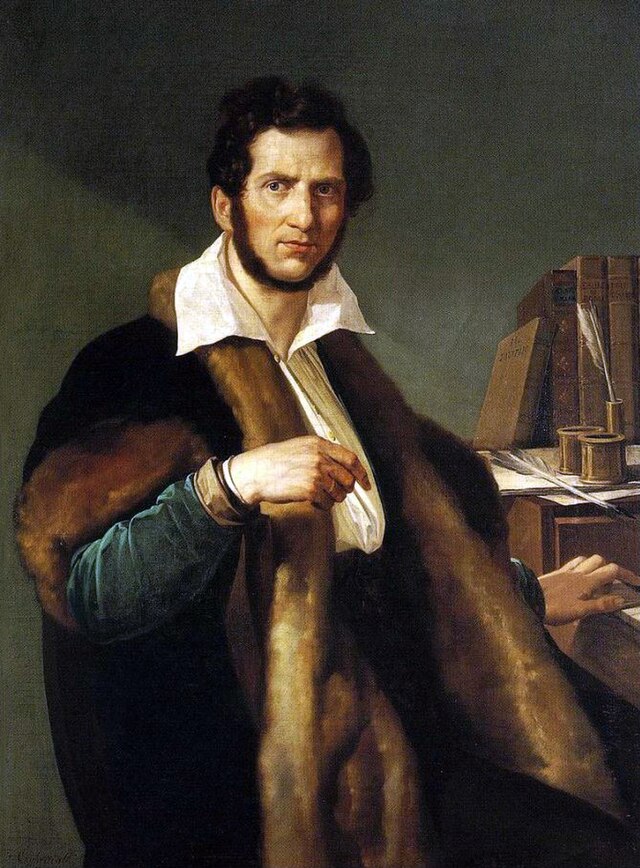
Gaetano Donizetti (1797–1848) — compositore italian, periodo Romantic. Prima rappresentazione di Il giovedì grasso, o Il nuovo Pourceaugnac nel 1828.
Trama di Il giovedì grasso, o Il nuovo Pourceaugnac
The lovers Nina and Teodoro are in despair since Nina is promised to another man, Ernesto. Their friend Sigismondo (who is mistakenly jealous of his wife Camilla) concocts a scheme to help the lovers. Inspired by Molière's Monsieur de Pourceaugnac, Sigismondo proposes that he and his wife will dress up as on "Fat Thursday". Then they will play tricks on Ernesto, whom they believe to be a mere simpleton, so that he will flee in confusion. Sigismondo will pose as a friend from Ernesto's past, and Camilla, as a former lover betrayed by Ernesto. When Ernesto arrives, he happens to learn of the scheme, and decides to turn the tables on the others. Pretending to be deceived, he treats Sigismondo as an old friend and treats Camilla as his former lover, which confirms Sigismondo in his misplaced suspicions. Only when Nina's father the Colonel is back does Ernesto confess to everyone that he, the supposed simpleton, has outwitted them. Ernesto consents to the wedding of Nina and Teodoro, Sigismondo promises never to be jealous again, and all praise the carnival season.
Estratto dalla sezione Synopsis dell’articolo Wikipedia — testo rilasciato con licenza CC BY-SA 4.0. Leggi la trama completa →
Libretto di Il giovedì grasso, o Il nuovo Pourceaugnac
Il libretto è scritto da Domenico Gilardoni. L’opera è classificata nel genere opera, farsa.
Opere contemporanee
Rappresentate nel decennio a cavallo del 1828, altre 4 opere del repertorio archiviato di compositori diversi:
- La straniera — Vincenzo Bellini (1828)
- William Tell — Gioachino Rossini (1828)
- I Capuleti e i Montecchi — Vincenzo Bellini (1830)
- Norma — Vincenzo Bellini (1831)
Altre opere di Gaetano Donizetti
- Alahor in Granata
- Alfredo il Grande
- Alina, regina di Golconda
- Belisario
- Betly, o sia La capanna svizzera
- Buondelmonte
- Caterina Cornaro
- Chiara e Serafina
- Dalinda
- Dom Sébastien
Dati sull’opera provenienti da Wikidata (CC0, pubblico dominio).