Turandot
Turandot è un’opera in italian di Giacomo Puccini, rappresentata per la prima volta nel 1921, con 4 arie archiviate in Wikidata.
1921 1921-01-01
Verismo
4
Turandot is an opera in three acts by Giacomo Puccini to a libretto in Italian by Giuseppe Adami and Renato Simoni. Puccini died in 1924, and his opera was left unfinished. The music was completed by Franco Alfano and premiered on 25 April 1926, almost a year and a half after Puccini's death.
The opera is set in China and follows the Prince Calaf, who falls in love with the cold-hearted Princess Turandot. In order to win her hand in marriage, a suitor must solve three riddles, with a wrong answer resulting in his execution. Calaf passes the test, but Turandot refuses to marry him. He offers her a way out: if she is able to guess his name before dawn the next day, he will accept death.
Renato Simoni
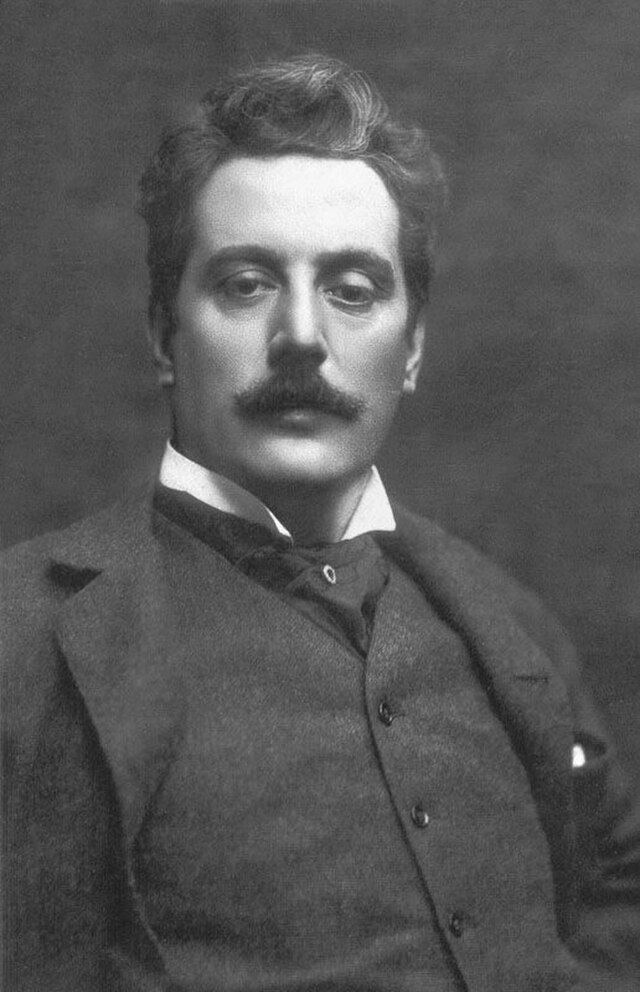
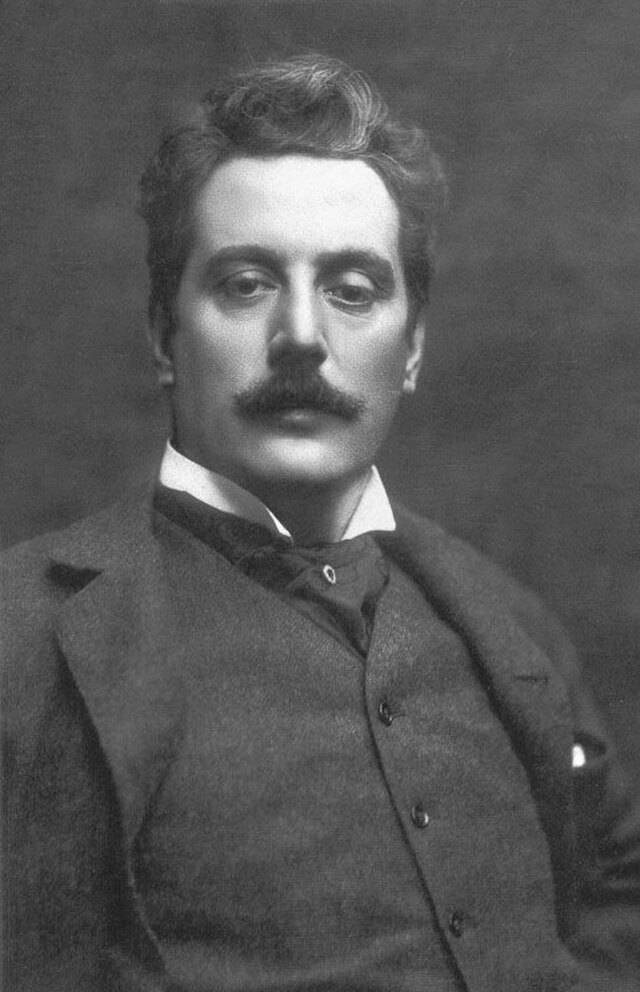
Giacomo Puccini (1858–1924) — compositore italian, periodo Verismo. Prima rappresentazione di Turandot nel 1921.
Trama di Turandot
In front of the imperial palace In China, the beautiful Princess Turandot will marry only a suitor who can answer three riddles. A Mandarin announces the law of the land (Aria – "Popolo di Pechino!" – "People of Peking!"). The Prince of Persia has failed to answer the three riddles, and he is to be beheaded at the next rising moon. As the crowd surges towards the gates of the palace, the imperial guards brutally repulse them, causing a blind old man to be knocked to the ground. The old man's slave-girl, Liù, cries out for help. A young man hears her cry and recognises that the old man is his long-lost father, Timur, the deposed king of Tartary. The young Prince of Tartary is overjoyed at seeing Timur alive, but still urges Timur not to speak his name because he is afraid that the Chinese rulers, who have conquered Tartary, may kill or harm them. Timur then tells his son that, of all his servants, only Liù has remained faithful to him. When the Prince asks her why, she tells him that once, long ago in the palace, the Prince had smiled at her (Trio with chorus – The crowd, Liù, Prince of Tartary, Timur: "Indietro, cani!" – "Back, dogs!"). The moon rises, and the crowd's cries for blood dissolve into silence. The doomed Prince of Persia, who is on his way to be executed, is led before the crowd. The young Prince is so handsome and kind that the crowd and the Prince of Tartary decide that they want Turandot to act compassionately, and they beg Turandot to appear and spare his lif…
Estratto dalla sezione Synopsis dell’articolo Wikipedia — testo rilasciato con licenza CC BY-SA 4.0. Leggi la trama completa →
Cast e personaggi di Turandot
11 personaggi documentati da Wikidata con indicazione del registro vocale:
- personTimur (bass)
- personThe Unknown Prince (Calaf) (tenor)
- personThe Emperor Altoum (tenor)
- personPang (tenor)
- personPong (tenor)
- personThe Prince of Persia (tenor)
- personPrincess Turandot (soprano)
- personLiù (soprano)
- personPing (baritone)
- personA Mandarin (baritone)
- personThe Executioner (Pu-Tin-Pao)
Libretto di Turandot
Il libretto è scritto da Giuseppe Adami, Renato Simoni — in totale 2 autori di libretto. L’opera è classificata nel genere opera.
Da Turandot all’opera
Turandot è un adattamento di Turandot — soggetto letterario di partenza per il libretto.
Opere contemporanee
Rappresentate nel decennio a cavallo del 1921, altre 6 opere del repertorio archiviato di compositori diversi:
- Edipo re — Ruggero Leoncavallo (1920)
- The Excursions of Mr. Brouček to the Moon and to the 15th Century — Leoš Janáček (1920)
- Il piccolo Marat — Pietro Mascagni (1921)
- Káťa Kabanová — Leoš Janáček (1921)
- Amadis — Jules Massenet (1922)
- La cena delle beffe — Umberto Giordano (1924)
Arie principali di Turandot
Personaggio Princess Turandot · in Italian · 1921
Nessun dorma
mictenor
in Italian · 1921
in Italian · 1921
in Italian · 1921
Altre opere di Giacomo Puccini
- Gianni Schicchi
- Il tabarro
- La rondine
- Suor Angelica
- Edgar (1885)
- Manon Lescaut (1890)
- La bohème (1896)
- Tosca (1898)
- Madama Butterfly (1903)
- La fanciulla del West (1909)
Dati sull’opera provenienti da Wikidata (CC0, pubblico dominio).