Manon Lescaut
Manon Lescaut è un’opera in italian di Giacomo Puccini, rappresentata per la prima volta nel 1890.
Manon Lescaut is an Italian-language opera in four acts composed by Giacomo Puccini between 1889 and 1892 to a libretto by Luigi Illica, Giuseppe Giacosa, Marco Praga and Domenico Oliva, based on the 1731 novel Histoire du Chevalier des Grieux, et de Manon Lescaut by Abbé Prévost. The opera was first performed in 1893 in Turin, at the Teatro Regio.
Domenico Oliva
Luigi Illica
Ruggero Leoncavallo
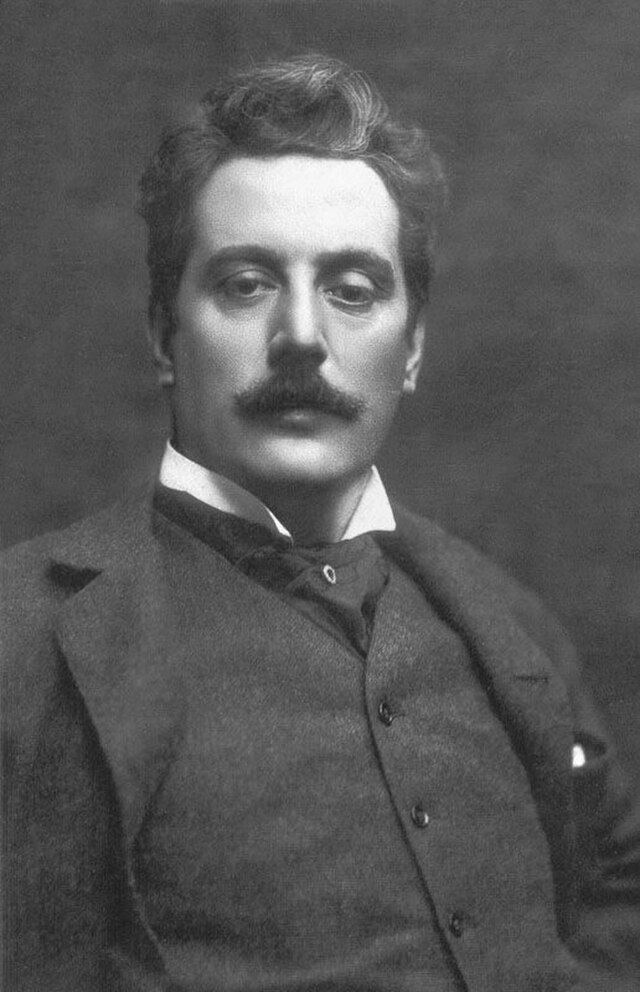
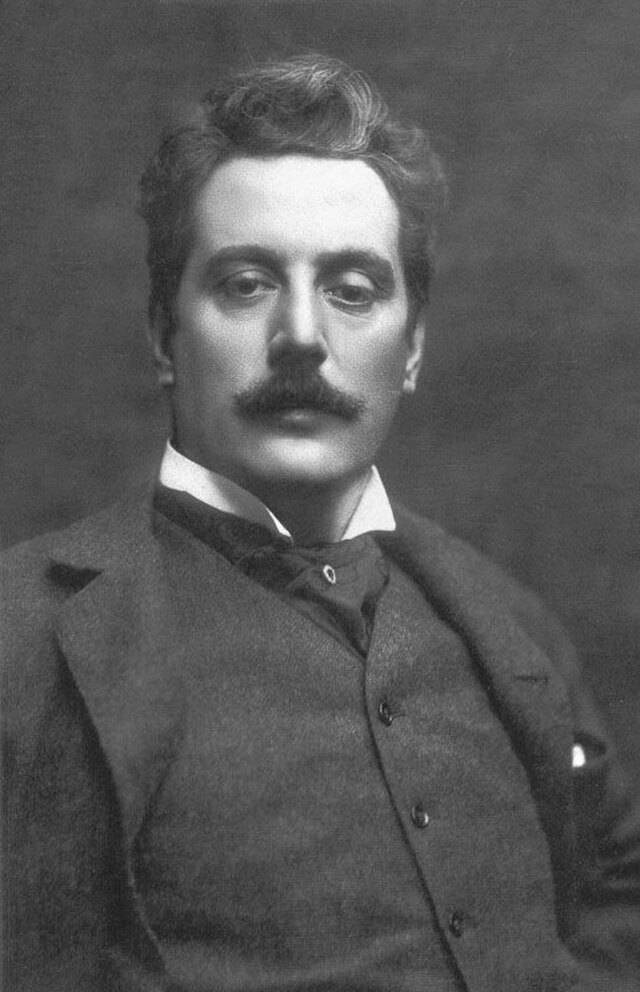
Giacomo Puccini (1858–1924) — compositore italian, periodo Verismo. Prima rappresentazione di Manon Lescaut nel 1890.
Trama di Manon Lescaut
Amiens: A large public square near the Paris Gate Off the square is an Avenue on one side and an Inn on the other, with a balcony. It is evening, townspeople, soldiers and a crowd of male students and girls stroll through the avenue and square while others gather in groups. Some are seated at the tables outside the Inn, drinking and gambling. Edmondo sings a song of youthful pleasure (Edmondo, chorus of students, girls and townspeople: Ave, sera gentile – Hail gentle evening). Des Grieux enters, and they greet him, but he is melancholic and does not join the others, singing cynically of love (des Grieux, Edmondo, chorus: L'amor?, L'amor? …io non conosco! – Love?, Love?…I know nothing of that). They joke with him and provoke him to feign flirtation with the girls (des Grieux: Tra voi, belle, brune e bionde – Among you beauties, dark and fair); (Edmondo, chorus: Ma, bravo!). A postillion horn is heard and the carriage from Arras pulls up at the Inn, as the crowd peers in to see who the passengers are (Chorus: Giunge il cocchio d'Arras! – Here comes the Arras coach!) Lescaut (Manon's brother), then an elderly treasurer-general, Geronte di Ravoir, descend from the coach, Geronte helping Manon, then the remainder of the passengers. The crowd comments (Chorus, Edmondo, Lescaut, des Grieux, Geronte: Discendono, vediam! – Look, they are getting down!) Edmondo and the students admire Manon (Chi non darebbe a quella donnina bella? – Who would not give to that beautiful young woman?…
Estratto dalla sezione Synopsis dell’articolo Wikipedia — testo rilasciato con licenza CC BY-SA 4.0. Leggi la trama completa →
Cast e personaggi di Manon Lescaut
12 personaggi documentati da Wikidata con indicazione del registro vocale:
- personGeronte di Ravoir (bass)
- personInnkeeper (bass)
- personSergeant of the Royal Archers (bass)
- personNaval Captain (bass)
- personChevalier des Grieux (tenor)
- personEdmondo (tenor)
- personDance Master (tenor)
- personLamplighter (tenor)
- personManon Lescaut (soprano)
- personLescaut (mezzo-soprano)
- personSinger (mezzo-soprano)
- personHairdresser
Libretto di Manon Lescaut
Il libretto è scritto da Marco Praga, Domenico Oliva, Luigi Illica, Ruggero Leoncavallo — in totale 4 autori di libretto. L’opera è classificata nel genere opera.
Da Manon Lescaut all’opera
Manon Lescaut è un adattamento di Manon Lescaut — soggetto letterario di partenza per il libretto.
L’archivio documenta 1 altre opere derivate dallo stesso soggetto:
- Manon — Jules Massenet (1884)
Opere contemporanee
Rappresentate nel decennio a cavallo del 1890, altre 6 opere del repertorio archiviato di compositori diversi:
- Cherevichki — Pyotr Ilyich Tchaikovsky (1887)
- The Enchantress — Pyotr Ilyich Tchaikovsky (1887)
- Esclarmonde — Jules Massenet (1889)
- Falstaff — Giuseppe Verdi (1889)
- Gina — Francesco Cilea (1889)
- The Jacobin — Antonín Dvořák (1889)
Altre opere di Giacomo Puccini
- Gianni Schicchi
- Il tabarro
- La rondine
- Suor Angelica
- Edgar (1885)
- La bohème (1896)
- Tosca (1898)
- Madama Butterfly (1903)
- La fanciulla del West (1909)
- Turandot (1921)
Dati sull’opera provenienti da Wikidata (CC0, pubblico dominio).