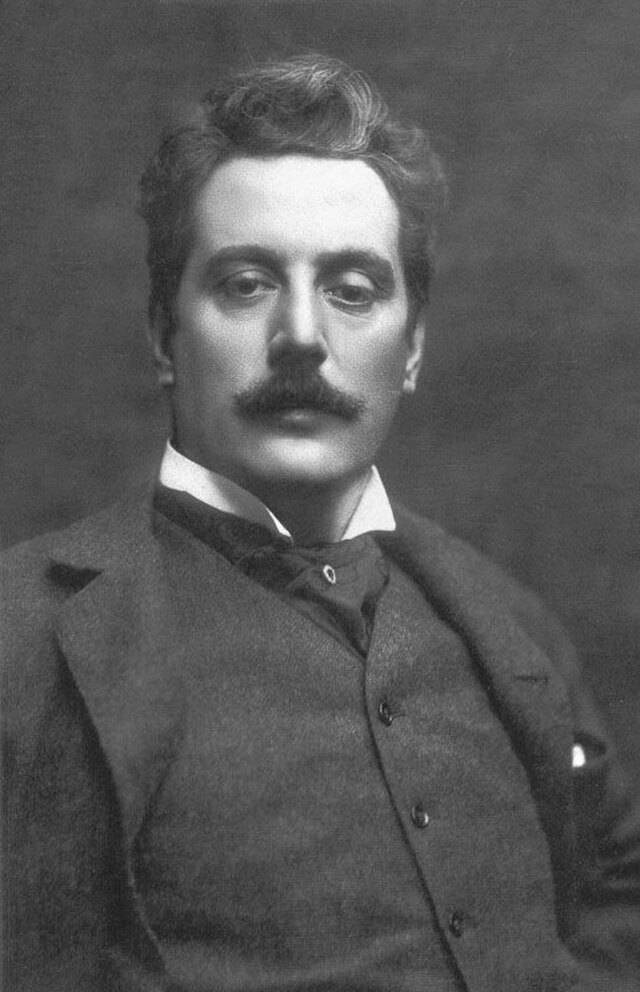
Gianni Schicchi
Gianni Schicchi è un’opera in italian di Giacomo Puccini, con 1 arie archiviate in Wikidata.
Gianni Schicchi is a comic opera in one act by Giacomo Puccini to an Italian libretto by Giovacchino Forzano, composed in 1917–18. The libretto is based on an incident mentioned in Dante's Divine Comedy. The work is the third and final part of Puccini's Il trittico – three one-act operas with contrasting themes, originally written to be presented together. Although it continues to be performed with one or both of the other trittico operas, Gianni Schicchi is now more frequently staged either alone or with short operas by other composers. The aria "O mio babbino caro" is one of Puccini's best known, and one of the most popular arias in opera.
comic opera
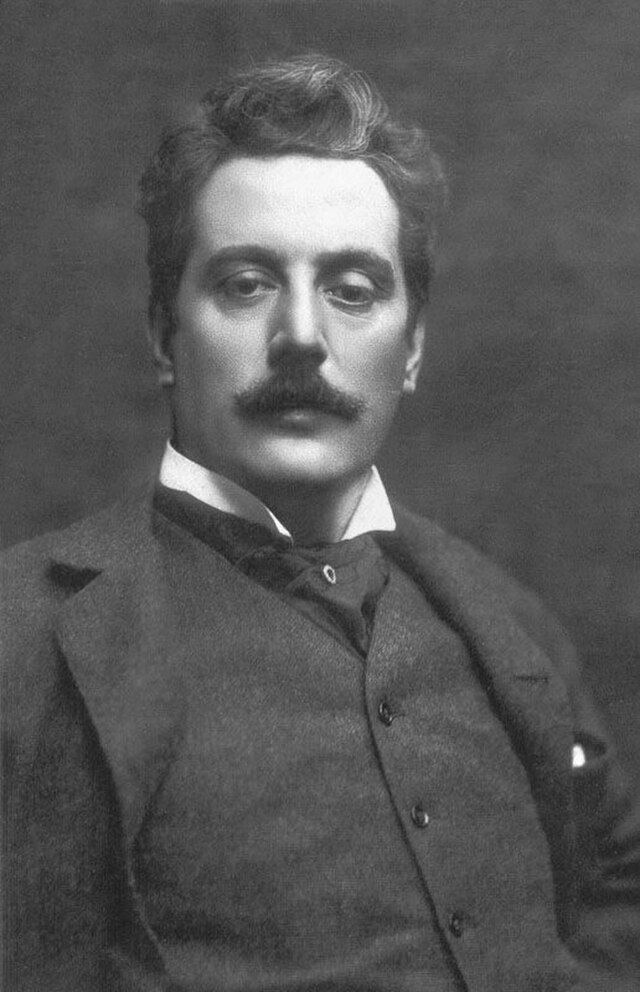
Giacomo Puccini (1858–1924) — compositore italian, periodo Verismo.
Trama di Gianni Schicchi
The story takes place in Florence, 1299. As Buoso Donati lies dead in his curtained four-poster bed, his relatives gather round to mourn his passing, but are really more interested in learning the contents of his will. Among those present are his cousins Zita and Simone, his poor-relation brother-in-law Betto, and Zita's nephew Rinuccio. Betto mentions a rumour he has heard that Buoso has left everything to a monastery; this disturbs the others and precipitates a frantic search for the will. The document is found by Rinuccio, who is confident that his uncle has left him plenty of money. He withholds the will momentarily and asks Zita to allow him to marry Lauretta, daughter of Gianni Schicchi, a newcomer to Florence. Zita replies that if Buoso has left them rich, he can marry whom he pleases; she and the other relatives are anxious to begin reading the will. A happy Rinuccio sends little Gherardino to fetch Schicchi and Lauretta. As they read, the relatives' worst fears are soon realised; Buoso has indeed bequeathed his fortune to the monastery. They break out in woe and indignation and turn to Simone, the oldest present and a former mayor of Fucecchio, but he can offer no help. Rinuccio suggests that only Gianni Schicchi can advise them what to do, but this is scorned by Zita and the rest, who sneer at Schicchi's humble origins and now say that marriage to the daughter of such a peasant is out of the question. Rinuccio defends Schicchi in an aria "Avete torto" ("You're mista…
Estratto dalla sezione Synopsis dell’articolo Wikipedia — testo rilasciato con licenza CC BY-SA 4.0. Leggi la trama completa →
Cast e personaggi di Gianni Schicchi
12 personaggi documentati da Wikidata con indicazione del registro vocale:
- personSimone (bass)
- personBetto di Signa (bass)
- personMaestro Spinelloccio (bass)
- personPinellino (bass)
- personGherardo (tenor)
- personLauretta (soprano)
- personGherardino (boy soprano)
- personGianni Schicchi (age 50) (baritone)
- personMarco (baritone)
- personSer Amantio di Nicolao (baritone)
- personZita (contralto)
- personLa Ciesca (mezzo-soprano)
Libretto di Gianni Schicchi
Il libretto è scritto da Giovacchino Forzano. L’opera è classificata nel genere opera, comic opera.
Da The Divine Comedy all’opera
Gianni Schicchi è un adattamento di The Divine Comedy — soggetto letterario di partenza per il libretto.
Arie principali di Gianni Schicchi
Personaggio Amira Willighagen · in Italian
Altre opere di Giacomo Puccini
- Il tabarro
- La rondine
- Suor Angelica
- Edgar (1885)
- Manon Lescaut (1890)
- La bohème (1896)
- Tosca (1898)
- Madama Butterfly (1903)
- La fanciulla del West (1909)
- Turandot (1921)
Dati sull’opera provenienti da Wikidata (CC0, pubblico dominio).