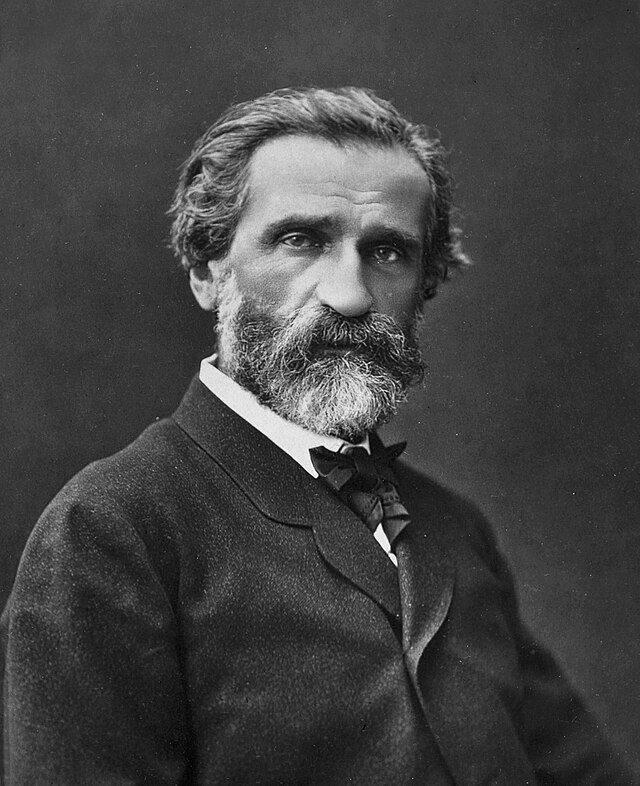
Nabucco
Nabucco è un’opera in italian di Giuseppe Verdi, rappresentata per la prima volta nel 1841, con 2 arie archiviate in Wikidata.
1841 1841-01-01
Romantic
2
Nabucco is an Italian-language opera in four acts composed in 1841 by Giuseppe Verdi to an Italian libretto by Temistocle Solera. The libretto is based on the biblical books of 2 Kings, Jeremiah, Lamentations, and Daniel, and on the 1836 play by Auguste Anicet-Bourgeois and Francis Cornu. However, Antonio Cortese's ballet adaptation of the play, given at La Scala in 1836, was a more important source for Solera than the play itself. Under its original name of Nabucodonosor, the opera was first performed at La Scala in Milan on the 9th of March 1842.
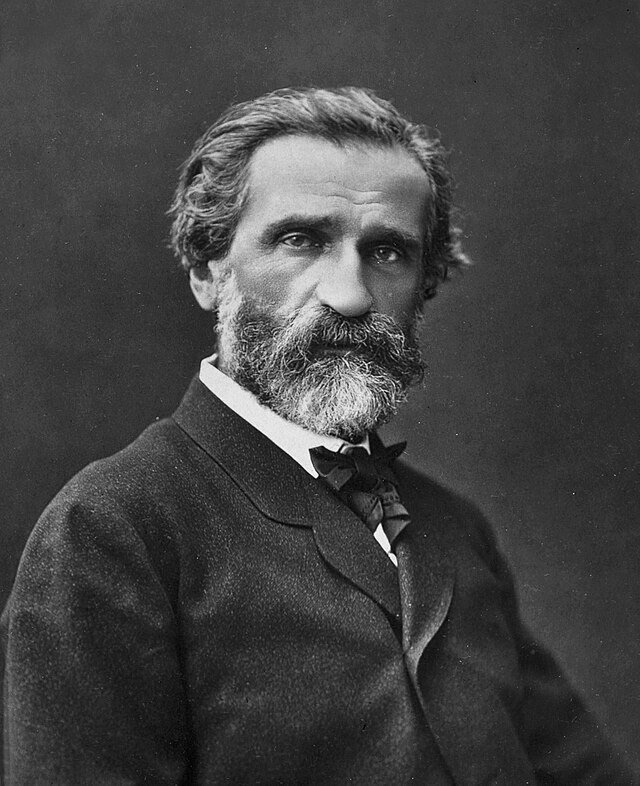
Giuseppe Verdi (1813–1901) — compositore italian, periodo Romantic. Prima rappresentazione di Nabucco nel 1841.
Trama di Nabucco
Interior of the Temple of Solomon The Israelites pray as the Babylonian army advances on their city ("Gli arredi festivi giù cadano infranti" / "Throw down and destroy all festive decorations"). The High Priest Zaccaria tells the people not to despair but to trust in God ("D'Egitto là su i lidi" / "On the shores of Egypt He saved the life of Moses"). The presence of a hostage, Fenena, younger daughter of Nabucco, King of Babylon, may yet secure peace ("Come notte a sol fulgente" / "Like darkness before the sun"). Zaccaria entrusts Fenena to Ismaele, nephew of the King of Jerusalem and a former envoy to Babylon. Left alone, Fenena and Ismaele recall how they fell in love when Ismaele was held prisoner by the Babylonians, and how Fenena helped him to escape to Israel. Nabucco's supposed elder daughter, Abigaille, enters the temple with Babylonian soldiers in disguise. She, too, loves Ismaele. Discovering the lovers, she threatens Ismaele: if he does not give up Fenena, Abigaille will accuse her of treason. If Ismaele returns Abigaille's love, however, Abigaille will petition Nabucco on the Israelites' behalf. Ismaele tells Abigaille that he cannot love her and she vows revenge. Nabucco enters with his warriors ("Viva Nabucco" / "Long live Nabucco"). Zaccaria defies him, threatening to kill Fenena if Nabucco attacks the temple. Ismaele intervenes to save Fenena, which removes any impediment from Nabucco destroying the temple. He orders this, while Zaccaria and the Israelites cur…
Estratto dalla sezione Synopsis dell’articolo Wikipedia — testo rilasciato con licenza CC BY-SA 4.0. Leggi la trama completa →
Cast e personaggi di Nabucco
9 personaggi documentati da Wikidata con indicazione del registro vocale:
- personZaccaria (bass)
- personHigh priest of Bel (bass)
- personAbdallo (tenor)
- personIsmaele (tenor)
- personAbigaille (dramatic coloratura soprano)
- personAnna (soprano)
- personNabucco (baritone)
- personFenena (mezzo-soprano)
- personJewish people
Libretto di Nabucco
Il libretto è scritto da Temistocle Solera. L’opera è classificata nel genere opera.
Da Nabuchodonosor all’opera
Nabucco è un adattamento di Nabuchodonosor, Old Testament, Nebuchadnezzar II — soggetto letterario di partenza per il libretto.
Opere contemporanee
Rappresentate nel decennio a cavallo del 1841, altre 4 opere del repertorio archiviato di compositori diversi:
- Benvenuto Cellini — Hector Berlioz (1838)
- Adelia — Gaetano Donizetti (1840)
- La Fille du régiment — Gaetano Donizetti (1840)
- Don Pasquale — Gaetano Donizetti (1842)
Arie principali di Nabucco
Personaggio Zaccaria · in Italian · 1841
in Italian · 1841
Altre opere di Giuseppe Verdi
- Alzira
- Gustavo III
- I due Foscari
- I Lombardi alla prima crociata
- I masnadieri
- I vespri siciliani
- Il corsaro
- Jérusalem
- La battaglia di Legnano
- La forza del destino
Dati sull’opera provenienti da Wikidata (CC0, pubblico dominio).