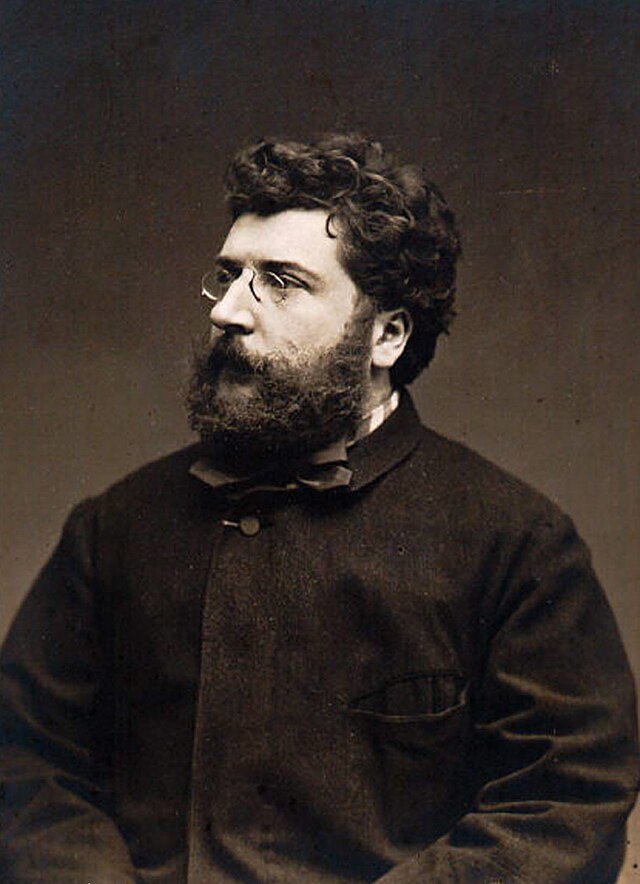
Carmen
Carmen è un’opera in french di Georges Bizet, rappresentata per la prima volta nel 1875, con 2 arie archiviate in Wikidata.
1875 1875-01-01
Romantic
2
Carmen is an opera in four acts by the French composer Georges Bizet. The libretto was written by Henri Meilhac and Ludovic Halévy, based on the novella of the same title by Prosper Mérimée. The opera was first performed by the Opéra-Comique in Paris on 3 March 1875, where its breaking of conventions shocked and scandalised its first audiences. Bizet died suddenly after the 33rd performance, unaware that the work would achieve international acclaim within the following ten years. Carmen has since become one of the most popular and frequently performed operas in the classical canon; the "Habanera" and "Seguidilla" from act 1 and the "Toreador Song" from act 2 are among the best known of all operatic arias.
French opera
opéra comique
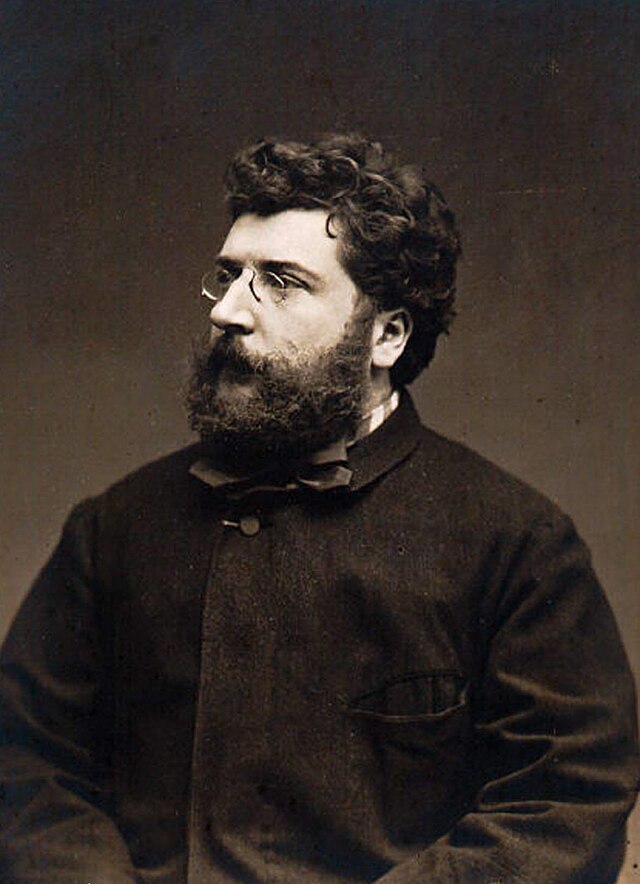
Georges Bizet (1838–1875) — compositore french, periodo Romantic. Prima rappresentazione di Carmen nel 1875.
Trama di Carmen
A square, in Seville. On the right, a door to the tobacco factory. At the back, a bridge. On the left, a guardhouse. A group of soldiers relax in the square, waiting for the changing of the guard and commenting on the passers-by ("Sur la place, chacun passe"). Micaëla appears, seeking José. Moralès tells her that "José is not yet on duty" and invites her to wait with them. She declines, saying she will return later. José arrives with the new guard, which is greeted and imitated by a crowd of urchins ("Avec la garde montante"). As the factory bell rings, the cigarette girls emerge and exchange banter with young men in the crowd ("La cloche a sonné"). Carmen enters and sings her provocative habanera on the untameable nature of love ("L'amour est un oiseau rebelle"). The men plead with her to choose a lover, and after some teasing she throws a flower to Don José, who thus far has been ignoring her but is now annoyed by her insolence. As the women go back to the factory, Micaëla returns and gives José a letter and a kiss from his mother ("Parle-moi de ma mère!"). He reads that his mother wants him to return home and marry Micaëla, who retreats in shy embarrassment on learning this. Just as José declares that he is ready to heed his mother's wishes, the women stream from the factory in great agitation. Zuniga, the officer of the guard, learns that Carmen has attacked a woman with a knife. When challenged, Carmen answers with mocking defiance ("Tra la la … Coupe-moi, brûle-moi");…
Estratto dalla sezione Synopsis dell’articolo Wikipedia — testo rilasciato con licenza CC BY-SA 4.0. Leggi la trama completa →
Cast e personaggi di Carmen
12 personaggi documentati da Wikidata con indicazione del registro vocale:
- personZuniga (bass)
- personDon José (tenor)
- personLe Remendado (tenor)
- personMicaëla (soprano)
- personFrasquita (soprano)
- personEscamillo (bass-baritone)
- personLe Dancaïre (baritone)
- personMoralès (baritone)
- personCarmen
- personMercédès (mezzo-soprano)
- personLillas Pastia
- personA guide
Libretto di Carmen
Il libretto è scritto da Ludovic Halévy. L’opera è classificata nel genere opera, French opera, opéra comique.
Da Carmen all’opera
Carmen è un adattamento di Carmen — soggetto letterario di partenza per il libretto.
Opere contemporanee
Rappresentate nel decennio a cavallo del 1875, altre 6 opere del repertorio archiviato di compositori diversi:
- Don César de Bazan — Jules Massenet (1872)
- Marie-Magdeleine — Jules Massenet (1873)
- Boris Godunov — Modest Petrovich Mussorgsky (1874)
- Der Ring des Nibelungen — Richard Wagner (1874)
- Götterdämmerung — Richard Wagner (1874)
- King and Charcoal Burner — Antonín Dvořák (1874)
Arie principali di Carmen
Personaggio Geraldine Farrar · in French · 1875
in French · 1875
Altre opere di Georges Bizet
- Ivan IV
- La jolie fille de Perth
- La maison du docteur
- Le docteur Miracle
- Noé
- Q3212034
- Don Procopio (1859)
- The Pearl Fishers (1863)
- Djamileh (1871)
Dati sull’opera provenienti da Wikidata (CC0, pubblico dominio).