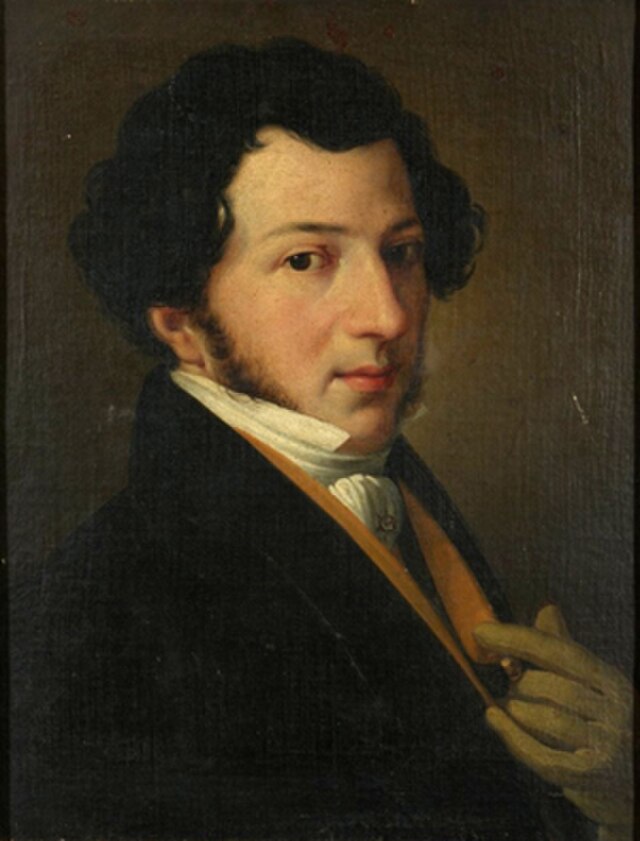
Torvaldo e Dorliska
Torvaldo e Dorliska è un’opera in italian di Gioachino Rossini.
Torvaldo e Dorliska is an opera semiseria in two acts by Gioachino Rossini to an Italian libretto by Cesare Sterbini, based on the novel/memoir Les Amours du chevalier de Faublas (1787–1790) by the revolutionary Jean-Baptiste Louvet de Couvray, whose work was the source of the Lodoïska libretto set by Luigi Cherubini (1791), and Lodoiska set by Stephen Storace (1794), and Simon Mayr (1796).
opera semiseria
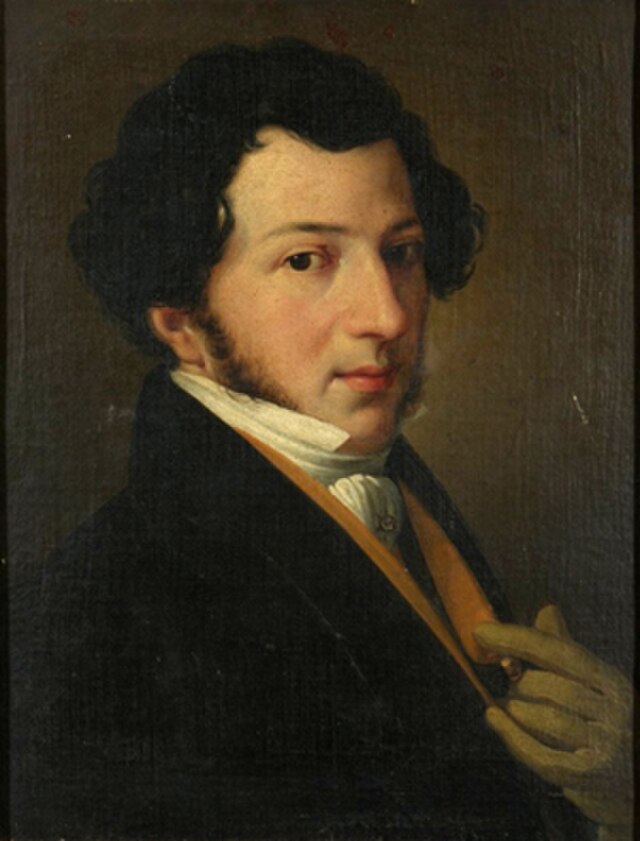
Gioachino Rossini (1792–1868) — compositore italian, periodo Romantic.
Trama di Torvaldo e Dorliska
The opera tells the story of the love between the Knight Torvaldo and his wife Dorliska, which is opposed by the terrible and violent Duke of Ordow, who is in love with Dorliska. In order to take her for himself, the Duke tries to kill Torvaldo and, after their fight, leaves him for dead. Making her way to the Duke's castle but not knowing that it is his home, Dorliska is held prisoner, comforted only by Carlotta and her brother Giorgio, the keeper of the castle. After escaping an ambush, Torvaldo enters the castle in disguise, but his identity is inadvertently revealed by Dorliska. The Duke then sentences him to death. Carlotta, Giorgio, and their friends conspire against the Duke to free the couple. Carlotta manages to steal the keys to Torvaldo's prison cell, and Dorliska embraces him again. However, the couple is discovered by the Duke, but before he can kill them, he is interrupted by the crowd entering the castle. The rebellious people capture the Duke and he is led away to prison and to his death. Torvaldo and Dorliska are freed.
Estratto dalla sezione Synopsis dell’articolo Wikipedia — testo rilasciato con licenza CC BY-SA 4.0. Leggi la trama completa →
Libretto di Torvaldo e Dorliska
Il libretto è scritto da Cesare Sterbini. L’opera è classificata nel genere opera, opera semiseria.
Altre opere di Gioachino Rossini
- Adelaide di Borgogna
- Adina
- Armida
- Aureliano in Palmira
- Bianca e Falliero, o sia Il consiglio di tre
- Ciro in Babilonia
- Demetrio e Polibio
- Eduardo e Cristina
- Elisabetta, regina d'Inghilterra
- Ermione
Dati sull’opera provenienti da Wikidata (CC0, pubblico dominio).