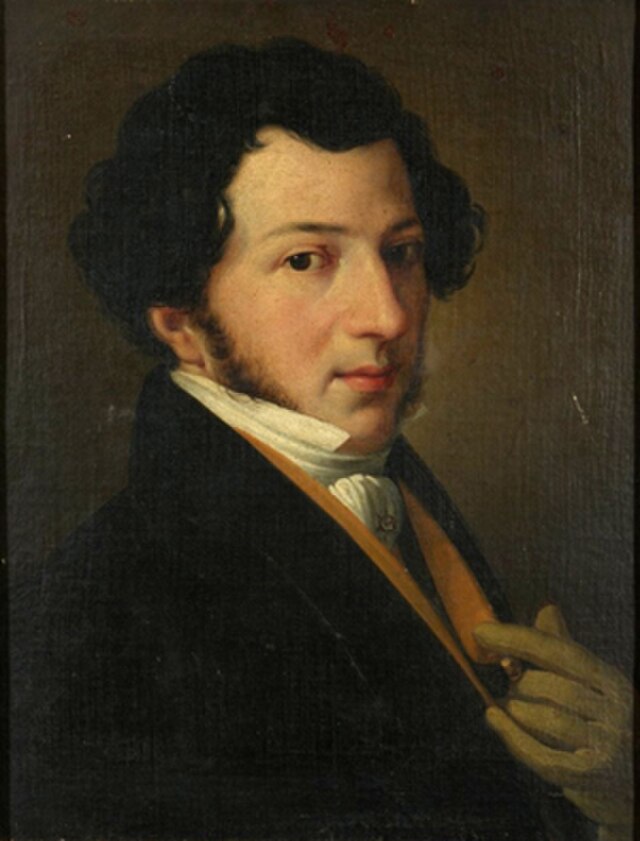
La Cenerentola
La Cenerentola è un’opera in italian di Gioachino Rossini, rappresentata per la prima volta nel 1816.
La Cenerentola, ossia La bontà in trionfo is an operatic dramma giocoso in two acts by Gioachino Rossini. The libretto was written by Jacopo Ferretti, based on the libretti written by Charles-Guillaume Étienne for the opera Cendrillon with music by Nicolas Isouard and by Francesco Fiorini for Agatina, o la virtù premiata with music by Stefano Pavesi. All these operas are versions of the fairy tale Cendrillon by Charles Perrault. Rossini's opera was first performed in Rome's Teatro Valle on 25 January 1817.
dramma giocoso
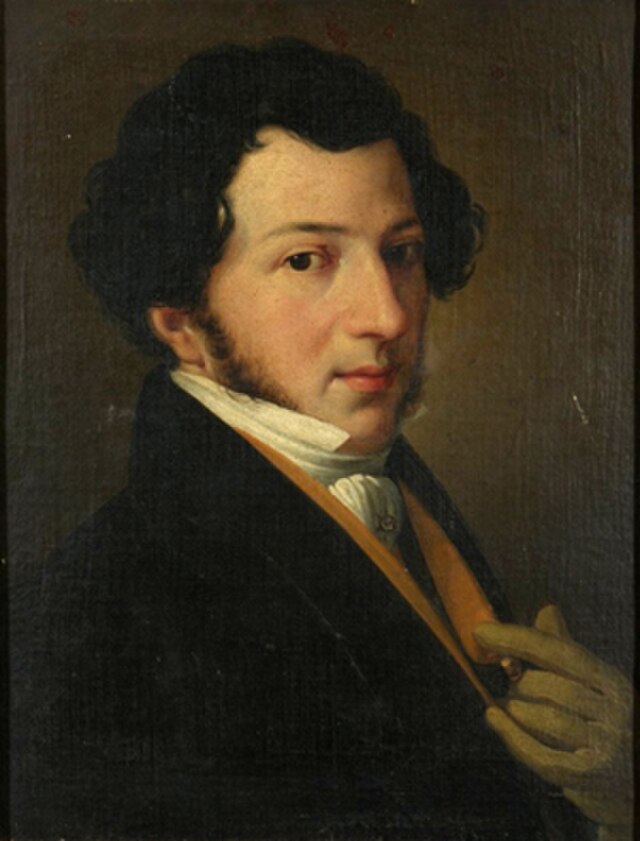
Gioachino Rossini (1792–1868) — compositore italian, periodo Romantic. Prima rappresentazione di La Cenerentola nel 1816.
Trama di La Cenerentola
Angelina, known to her stepfather and stepsisters as "Cenerentola," is forced to serve as the maid in her own home. She sings of a king who married a common girl chosen for her kindness against the beauty and adornment of her competitresses ("Una volta c’era un rè"). A beggar arrives; her stepsisters, Clorinda and Tisbe, want to send him away, but Cenerentola gives him bread and coffee. Courtiers follow, announcing that Prince Ramiro will visit while he searches for the most beautiful girl in the land to wed. Cenerentola's stepfather, Don Magnifico, hopes to use this as an opportunity to save his own failing fortune. When the room is empty, Ramiro enters alone, disguised as a valet. The "beggar" – in fact, his tutor, Alidoro – has informed him of a goodhearted young woman spotted here. Ramiro intends to find her incognito. Cenerentola returns, and she and Ramiro are attracted to each other (duet: "Un soave non-so che"), but when he asks who she is, she is overwhelmed and flees. Finally, the "prince" arrives – the real valet, Dandini, who has taken his master's place – and Magnifico, Clorinda, and Tisbe fall over themselves to flatter him. He invites the family to a ball that evening, where he plans to find his bride; Cenerentola asks to join them, but Magnifico refuses (quintet: "Signor, una parola"). This callousness is not lost on Ramiro. Alidoro returns to inquire after a third daughter in the house; Magnifico claims she has died and stealthily threatens to murder Cenerent…
Estratto dalla sezione Synopsis dell’articolo Wikipedia — testo rilasciato con licenza CC BY-SA 4.0. Leggi la trama completa →
Cast e personaggi di La Cenerentola
8 personaggi documentati da Wikidata con indicazione del registro vocale:
- personDon Magnifico (bass)
- personDandini (baritone)
- personAlidoro (bass)
- personDon Ramiro (tenor)
- personAngelina (mezzo-soprano)
- personClorinda (soprano)
- personTisbe (mezzo-soprano)
- personCourtiers from Prince Ramiro's palace
Libretto di La Cenerentola
Il libretto è scritto da Jacopo Ferretti. L’opera è classificata nel genere opera, dramma giocoso.
Da Cinderella all’opera
La Cenerentola è un adattamento di Cinderella — soggetto letterario di partenza per il libretto.
L’archivio documenta 1 altre opere derivate dallo stesso soggetto:
- Cendrillon — Jules Massenet (1899)
Altre opere di Gioachino Rossini
- Adelaide di Borgogna
- Adina
- Armida
- Aureliano in Palmira
- Bianca e Falliero, o sia Il consiglio di tre
- Ciro in Babilonia
- Demetrio e Polibio
- Eduardo e Cristina
- Elisabetta, regina d'Inghilterra
- Ermione
Dati sull’opera provenienti da Wikidata (CC0, pubblico dominio).