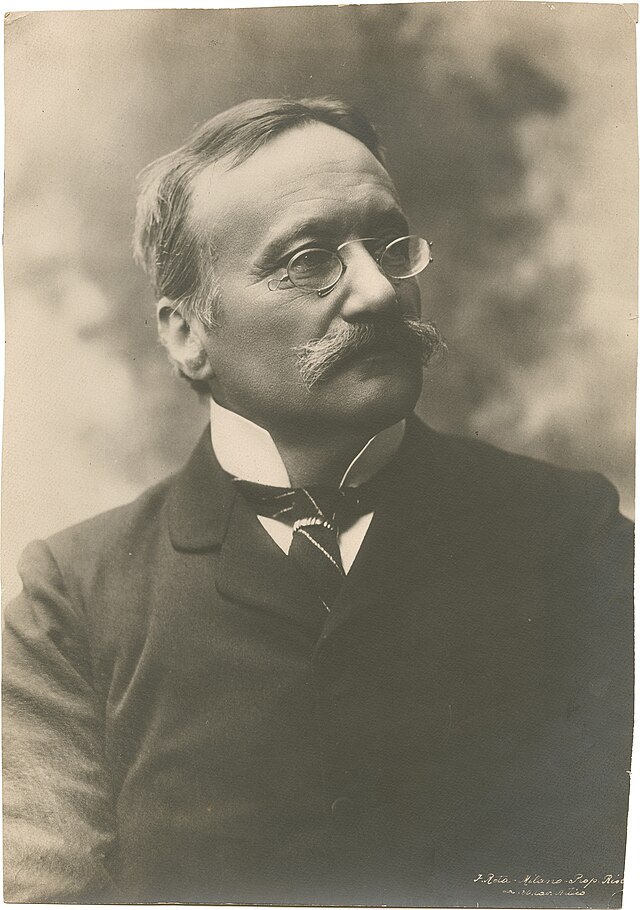
Arrigo Boito
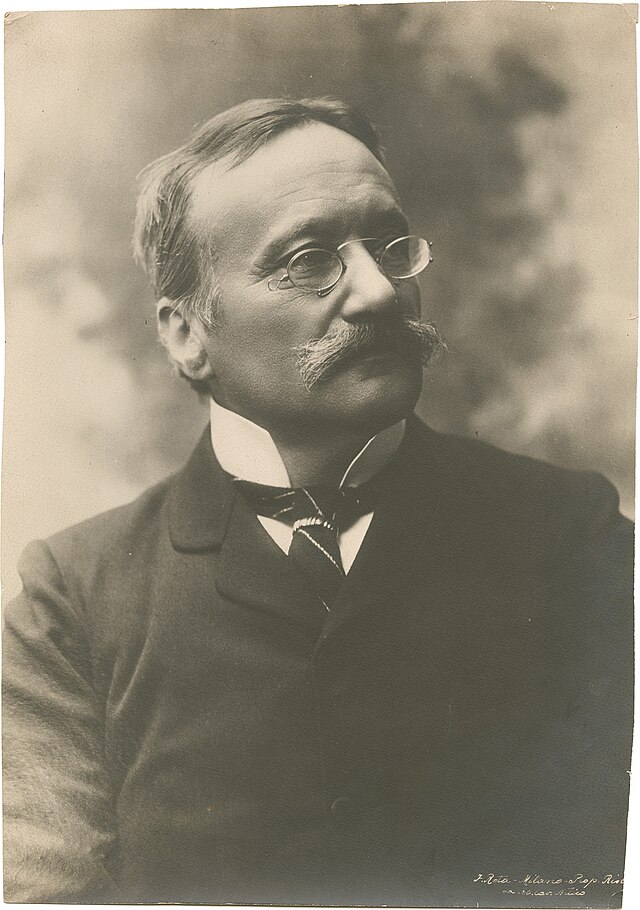
Arrigo Boito (1842–1918) è un compositore italian del periodo Verismo, con 2 opere e 0 arie archiviate nel database.
Ritratto tratto da Wikimedia Commons (pubblico dominio).
1842
1918
Italian
2
0
Padua
Milan
Arrigo Boito was an Italian librettist, composer, poet and critic whose only completed opera was Mefistofele. Among the operas for which he wrote the libretti are Giuseppe Verdi's monumental last two operas Otello and Falstaff as well as Amilcare Ponchielli's La Gioconda.
Vita di Arrigo Boito
Nazionalità e periodo
Arrigo Boito è un compositore Italian del periodo Verismo, vissuto dal 1842 al 1918, nato a Padua e morto a Milan.
Movimento e corrente musicale
Arrigo Boito è associato al movimento Scapigliatura — cornice stilistica che influenza il linguaggio armonico e drammatico delle sue opere.
Vita e carriera
Boito was born in Padua. He was the son of Silvestro Boito, a painter of miniatures, who was not of noble birth but passed himself off as a nobleman, and his wife, a Polish countess, Józefina Radolińska. His older brother, Camillo Boito, was an Italian architect and engineer as well as a noted art critic, art historian and novelist. Boito studied music at the Milan Conservatory with Alberto Mazzucato until 1861, where he was a contemporary of Albert Visetti and Amintore Galli. In 1866, with Galli, Franco Faccio, and Emilio Praga, Boito fought under Giuseppe Garibaldi in the Seven Weeks' War in which the Kingdom of Italy and Prussia fought against Austria, after which Venice was ceded to Italy. Between 1887 and 1894, he had an affair with the celebrated actress Eleonora Duse. Their relationship was carried out in a highly clandestine manner, presumably because of Boito's many aristocratic friends and acquaintances. Despite this, their voluminous correspondence over the years survives. The two remained on good terms until his death. Towards the end of his musical career, Boito succeeded Giovanni Bottesini as director of the Parma Conservatory after the latter's death in 1889 and held the post until 1897. He received the honorary degree of Doctor of Music from the University of Cambridge in 1893, and on his death in Milan, he was interred there in the Cimitero Monumentale. He was an atheist. A memorial concert was given in his honour at La Scala in 1948. The orchestra was conduc…
Estratto dalla biografia Wikipedia di Arrigo Boito — testo rilasciato con licenza CC BY-SA 4.0. Leggi la biografia completa →
Contributo all’opera
Arrigo Boito ha lasciato 2 opere registrate in Wikidata, con 0 arie principali descritte in pagine dedicate.
Compositori contemporanei di Arrigo Boito
Altri compositori del database nati nella stessa generazione di Arrigo Boito (1842) — utile per collocare l’opera in un contesto generazionale:
- Jules Massenet
1842–1912 · France · Romantic - Antonín Dvořák
1841–1904 · Kingdom of Bohemia · Romantic - Pyotr Ilyich Tchaikovsky
1840–1893 · Russian Empire · Romantic - Modest Petrovich Mussorgsky
1839–1881 · Russian Empire · Romantic - Georges Bizet
1838–1875 · French · Romantic - Camille Saint-Saëns
1835–1921 · France · Romantic
Elenco delle opere di Arrigo Boito
in Italian · opera · libretto di Arrigo Boito
Nerone
1862
in Italian · opera · libretto di Arrigo Boito
Biografia ed elenco delle opere provenienti da Wikidata (CC0, pubblico dominio).